
Oil does far more than reduce friction in rotating equipment. It seals clearances, carries away heat, prevents corrosion, suspends contaminants and protects bearings. Lose any one of those functions and the rest of the machine follows.
Grease insights
- Many things can go wrong with any piece of rotating equipment. But they usually have two things in common: The problem was avoidable and it started with the lubricant.
- The key principles to remember: Use the right lubricant in the right amount on the right interval. And avoid contamination.
- The best teams stop treating lubrication as a calendar task and start treating it as a predictive maintenance tool.
- The lubricant tells the story long before the equipment does. Listen carefully when it speaks.
Operators of rotating equipment know all the things that can go wrong with their machines, including carryover of oil and moisture. Bearings can fail. Motors can overheat and lock up. And production can grind to a halt.
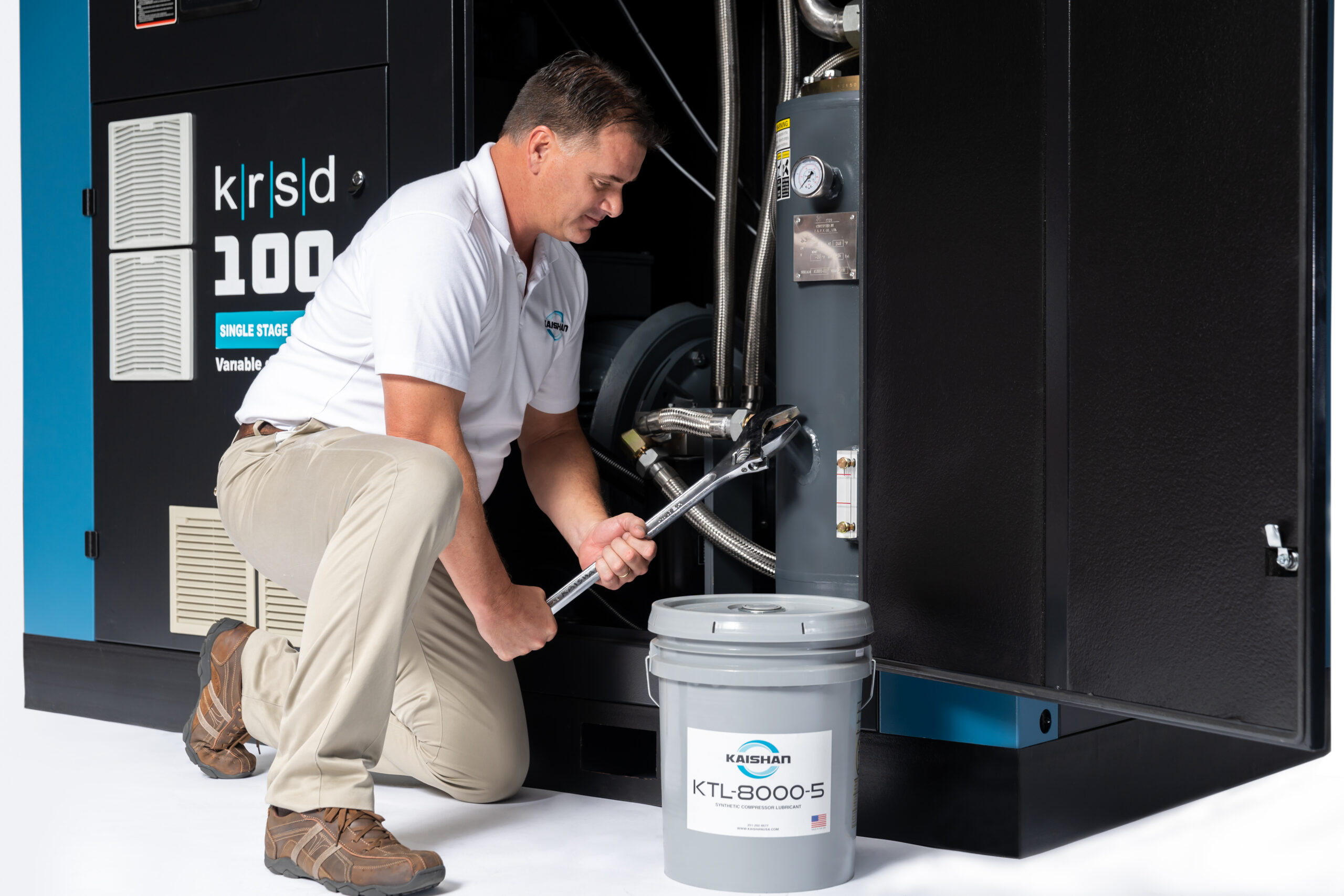
A surprising number of those failures have two things in common: They were preventable and the first warning signs were often in the lubricant (see Figure 1.)
In any piece of rotating equipment, oil is doing far more than just reducing friction. It probably is also:
- Sealing clearances
- Carrying away heat
- Preventing corrosion
- Suspending contaminants
- Protecting the bearings
Lose any one of those functions and the rest of the machine follows. Oil is the lifeblood of a rotary screw air compressor. And it is the reason why so many aspects of machine reliability quietly depend on this critical fluid.
That’s true across all rotating equipment. Pumps, gearboxes, motors, fans and conveyors all rely on a thin film of lubricant standing between expensive metal components. Treat that film well and the equipment runs for years. Neglect it and failure stops being a matter of if and starts being a matter of when.
The key principles: Right lubricant. Right amount. Right interval. And no contamination. They are the basis for the 10 worst practices below.
Worst practice #1. “A little bit of dirt won’t hurt anything.”
Contamination is one of the greatest threats to lubricant life. Dirt, moisture, metal particles and even something as simple as a dusty funnel during an oil change can significantly shorten the useful life of an otherwise perfectly good fluid. Many premature lubricant-related failures are ultimately cleanliness problems rather than problems with the lubricant itself. And they are preventable.
The fix is procedural more than anything else. Clean funnels. Clean containers. Clean hands. Filtered transfers.
The key takeaway: Most lubricant failures aren’t because the oil itself was poor quality, but because something contaminated it.
Worst practice #2. “If it’s not running hot, that’s a good thing.”
Lubricants are designed to operate within a specific temperature range. Compressors that run continuously at very light loads often never get the lubricant hot enough to evaporate moisture. That moisture is deadly. Over time, it contributes to oxidation, sludge formation, acid development and shortened lubricant life.
If oil temperature rarely reaches the recommended operating level, there’s a temperature problem long before there’s an oil problem.
Worst practice #3. “We don’t have time to run an oil analysis.”
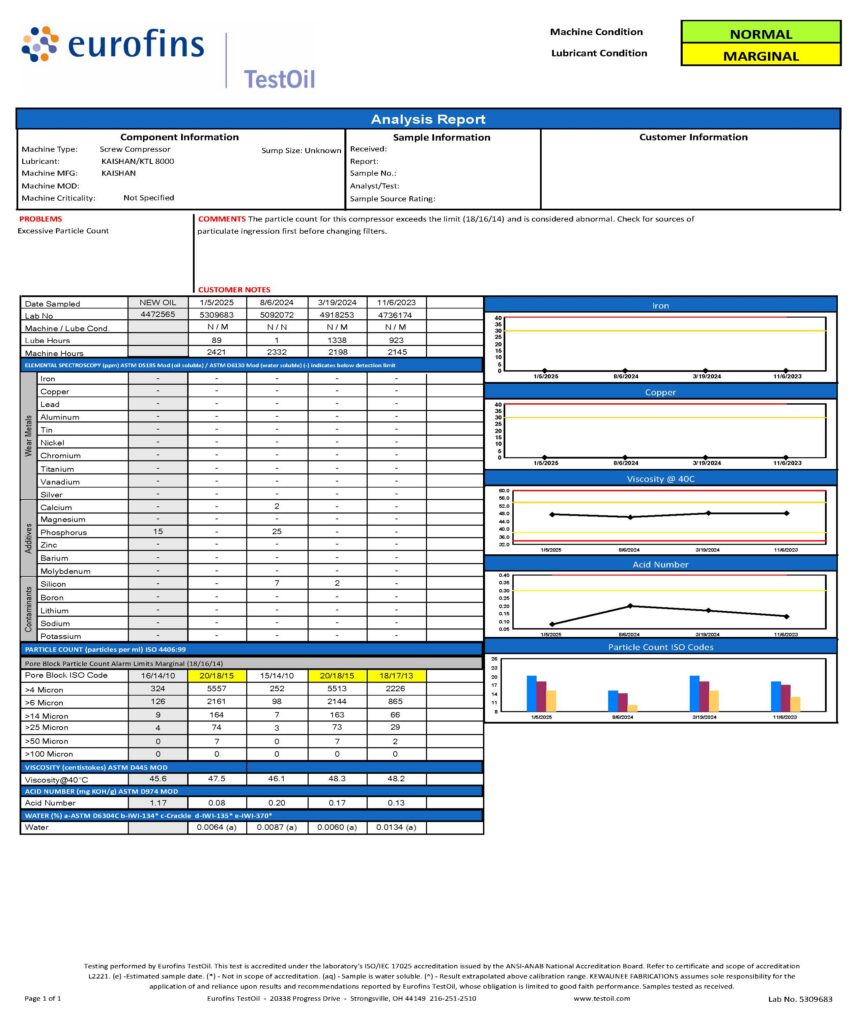
If there is one predictive maintenance practice that stands above all the others, it is routine oil analysis (see Figure 2). A standard oil sample gives visibility into contamination, viscosity changes, bearing wear, overheating, coolant intrusion and filtration health long before any of those issues show up on the shop floor.
Read the manufacturer’s fluid sample report. Not knowing the limits that flag an error, it will be nearly impossible to interpret correctly.
Think of it as a proactive checkup for the machine, so don’t wait for a compressor to fail.
Worst practice #4. “All oils are the same.”
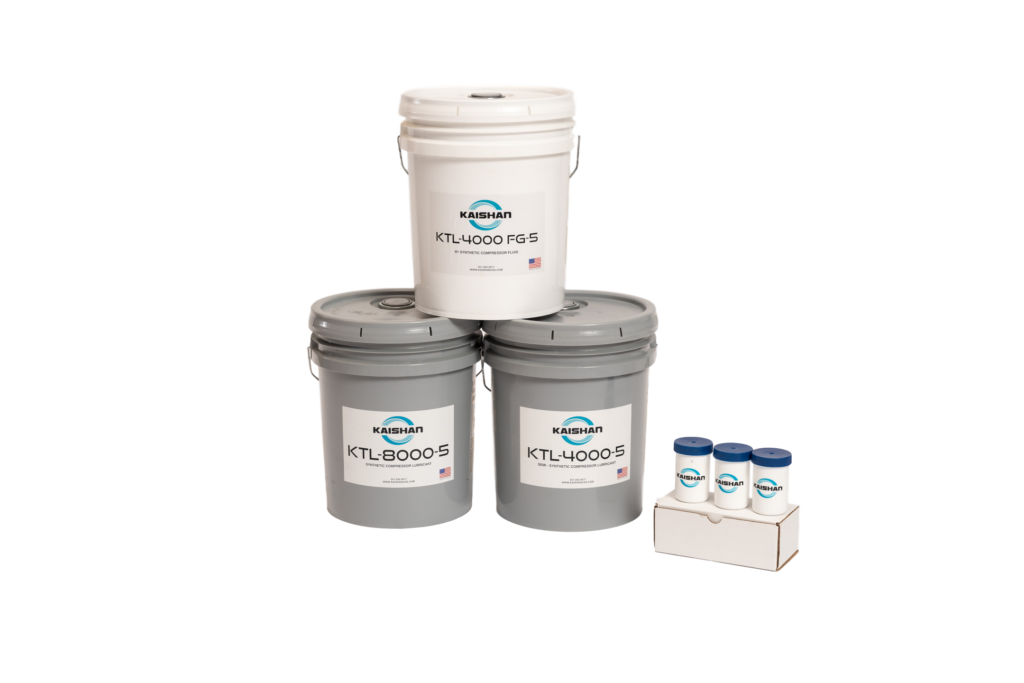
Not all lubricants are created equal. Viscosity, additive packages and synthetic versus mineral formulations all matter and the differences between them are not academic. They translate directly into bearing life, varnish formation, energy use and change intervals.
Manufacturers spend a lot of time and money validating lubricants for their equipment. It’s important to follow recommendations. The cost of using the right oil is almost always less than the cost of using the wrong one.
It would be ludicrous to put transmission oil in a compressor because that’s the only thing available. The wrong lubricant might save a few dollars today and cost an airend tomorrow, turning a $100 savings on oil into a $20,000 repair.
Worst practice #5. “We’ll get to it when we get to it.”
Operating hours are a starting point. But only that. Ambient conditions, dust, moisture, operating temperature and duty cycle all influence how long a lubricant remains effective. Two compressors with identical load hours can have very different oil life depending on the air they breathe and the work they do.
The teams that get the longest life from their oil are the ones who treat the load hours as one input among several, with oil analysis as the north star.
Worst practice #6. “It’s impossible to put in too much grease.”
Grease seems simple, which is exactly why it is overlooked. Both over-greasing and under-greasing create real problems. Not using enough grease accelerates wear and shortens bearing life. But excess grease is just as bad. It generates heat and forces grease into areas where it does not belong.
The right amount of the right grease, on the right interval, almost always beats a heavy-handed repack. When in doubt, seek direction from the bearing manufacturer rather than the technician with the strongest grip on the grease gun.
Worst practice #7. “My oil will last longer if the compressor doesn’t run as much.”
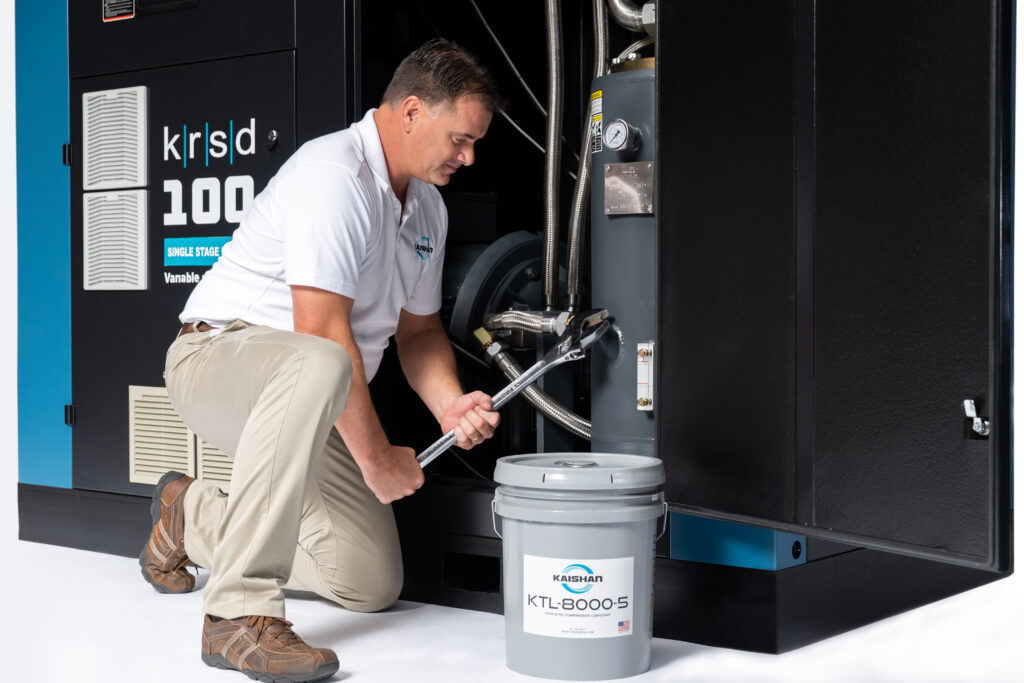
A common misconception is that fewer loaded hours automatically mean longer oil life (see Figure 3). That is not always the case. Compressors that spend extended periods lightly loaded or in unload may never reach the operating temperatures necessary to drive moisture out of the lubricant. Over time, that trapped moisture accelerates oxidation and lubricant degradation. The moisture concern becomes even more important with variable speed compressors.
In addition, lubricant also ages with time, not just operating hours. Oxidation, moisture exposure and contamination can degrade fluid even in equipment that accumulates relatively few hours, which is why manufacturers commonly specify both operating-hour and calendar-based maintenance limits.
Worst practice #8. “Oil will last longer with a variable-speed drive (VSD) compressor.”
VSDs are extremely efficient and a great match for facilities with fluctuating demand, but they often spend much more time operating at reduced speeds and lighter loads. That makes oil condition monitoring (see Figure 4) even more important with a VSD than simply tracking the load hours.
If there are VSDs in the plant, treat oil sampling as non-negotiable rather than optional.
Worst practice #9. “Grease is grease.”
One of the more common mistakes in industrial plants is mixing greases. Different products may use different thickener systems and, thus, they may not be chemically compatible. The reaction can show up as soft grease that purges out of the bearings, hard grease that starves it or sludge that gums everything up.
Before switching greases, verify compatibility with the lubricant or bearing manufacturer. If the products are incompatible, follow the recommended purge or cleaning procedure before introducing the new grease.
Worst practice #10. “Oil is oil.”
Synthetic lubricants generally outperform mineral oils in compressed air applications, but the right answer depends on operating conditions and equipment.
Mineral oils
Mineral oils are petroleum-based and have been the industry standard for decades. They are widely available, typically less expensive up front and may work in many applications, especially intermittent-duty or lower-temperature environments. The trade-off is that mineral oils break down faster under heat and pressure and are more susceptible to oxidation and varnish formation. For a standard rotary screw compressor running under typical conditions, change intervals should be in the range of 2,000 to 4,000 hours with mineral oil.
Synthetic lubricants
Synthetic lubricants, including polyalphaolefin- (PAO) and polyalkylene glycol (PAG) based formulations, are engineered to resist thermal breakdown, oxidation and varnish deposit formation. They hold viscosity more consistently across temperature ranges, protect better during cold starts and last significantly longer between changes. Many synthetics carry manufacturer-recommended intervals of 6,000 to 8,000 hours or more, which translates into fewer shutdowns and lower maintenance costs over time. For high-duty-cycle operations, continuous-run facilities or environments with elevated ambient temperatures, synthetics almost always make more sense from a total cost of ownership perspective.
Compatibility when switching
When switching from mineral to synthetic or from one synthetic base stock to another, it’s important not to assume compatibility. Different base stocks and additive systems may not be compatible. PAG-based formulations require careful compatibility verification before being mixed with other lubricant types. Mixing them can cause additive reactions, sludge formation and accelerated wear. Always consult the compressor manufacturer’s guidelines and flush the system properly before introducing a new lubricant type.
It’s important to understand what not to do, but let’s talk about why getting lubrication right is a reliability strategy, not just a maintenance task.
Why lubrication is a reliability strategy
Most bearing failures are not actually bearing problems. They are lubrication problems. The bearing is simply the component that fails first.
Compressors have exceeded 80,000 operating hours on their original airend because lubrication was properly managed. Major failures have happened far earlier when contamination entered the system or maintenance practices were not followed. In many cases, the lubricant tells the story long before the equipment does. Listen when it does.
Lubrication is part of an overall equipment reliability strategy rather than simply another maintenance task. Routine oil analysis, careful attention to operating conditions and use of lubricants engineered for the application should all be practiced. Operating conditions, especially duty cycle, operating temperature and contamination, often have a greater impact on lubricant life than operating hours alone.
Cover the assets
Lubrication is not about changing oil. It is about protecting assets. Every rotating machine depends on a thin film of lubricant separating expensive metal components. When that film is maintained correctly, equipment lasts longer, operates more efficiently and experiences far fewer unexpected failures. When it is neglected, the countdown to a failure is already ticking.
Selecting the right lubricant, in the right amount, on the right interval, with no contamination, is not glamorous work.
Lubrication isn’t merely a maintenance task; it’s one of the most powerful predictors of equipment reliability. The lubricant tells the story long before the equipment does. The plants that learn to listen experience fewer failures, lower costs and more reliable production.
Key takeaways to maintain any piece of rotating equipment:
- Lubricant is not just friction control. In a compressor, it also seals, cools and protects the airend and bearings.
- Contamination is the number one enemy of lubricant life, and most contamination events are procedural, not product related.
- Routine oil analysis can be one of the highest-value predictive maintenance tools available for oil-lubricated compressed air equipment.
- Operating hours alone do not determine oil life. Duty cycle, temperature, ambient conditions and contamination all matter.
- Both over-greasing and under-greasing damage bearings. The correct amount of the right grease at the right interval wins.
- VSD compressors may spend extended periods at reduced speed and lighter load, which makes moisture and oil condition even more important to monitor.
- Mixing greases without confirming compatibility is one of the most common silent causes of bearing failure in industrial plants.