
Many companies have embraced lean manufacturing concepts but haven’t always extended those insights to maintenance procedures. Learn 10 tips to apply to compressed air systems.
Learning objectives
- Understand the importance of applying lean principles to the maintenance of production equipment.
- Learn how to identify and eliminate waste across the plant floor.
- Gain insight into the importance of transitioning from traditional preventive maintenance to reality-based predictive maintenance.
Maintenance insights
- By applying lean manufacturing principles like 5S and data-driven decision-making, industrial companies can transform their maintenance processes to improve efficiency and reduce operational waste.
- Transitioning from calendar-based schedules to predictive maintenance allows organizations to address equipment needs based on actual conditions, which minimizes downtime and eliminates unnecessary service costs.
Many industrial companies have embraced the core concepts of lean manufacturing, implementing 5S principles (sort, set in order, shine, standardize and sustain), kanban workflow management systems and other lean concepts.
But while they’ve applied them to production applications, they haven’t always extended them to their maintenance processes, missing an important opportunity to improve operations, reduce downtime, eliminate waste, conserve energy and cut costs. And they have very rarely extended those principles to compressed air maintenance.
Here are 10 ways that lean principles can be applied to maintenance. High-level concepts use compressed air for illustration purposes. Nearly every plant relies on compressed air, a proverbial fourth utility, joining electricity, water and natural gas in providing plants with basic services.
The first broad concept involves taking a gradual approach.
1. Slow down
You don’t have to do everything at once. Or by tomorrow. Go step by step, taking one at a time.
Focus first on energy costs, because that’s where your company incurs most of the lifetime cost of any piece of plant equipment, air compressors especially. The cost of the machine is simply a fraction of the total cost of ownership.
The good news: you can start small, with minimal budget. In fact, many steps in the lean journey are free.
You can, for instance, purchase inexpensive flow monitors one quarter, then add energy monitoring the next. You can scale up as your budget allows.
2. Focus first on mission-critical functions
Spend your time on the things that matter. The functions or processes that will take production down. After all, downtime is the most wasteful thing that can happen in an industrial plant.
Most manufacturers consider overall equipment effectiveness the gold standard for tracking manufacturing productivity. It helps identify unplanned downtime relative to the machine’s availability.
Structure initial key performance indicators around that core concept and stay constantly focused on what matters.
3. If it doesn’t add value, it’s waste
The most important advance in adopting a lean manufacturing approach is that it takes aim at some time-honored concepts, such as preventive maintenance (PM).
Lean maintenance experts would tell you that doing PM based on the calendar can easily lead to waste. Changing parts, just because you’ve reached a certain time interval, is a classic example of over-processing. Almost as bad as under-processing.
If you’re looking at a calendar to determine when you should change a part, you’re looking in the wrong place. To achieve a lean organization, you need the right maintenance at the right time. No more, no less.
Preventive maintenance is not really a best practice, just the most basic approach or the minimum requirement to preserve your warranty protection. In many cases, it’s a relatively low bar.
Use the real-world data, the actual conditions in your plant, to drive maintenance. Do what your machine is telling you. If that sounds more like predictive than PM, that’s a good thing. Lean maintenance is PM.
4. Waste is all around us
In a compressed air system, it’s not unusual for leaks in your system to cost 20% to 30% of the compressed air produced (see Figure 1). As a result, you’re paying for something that adds zero value. So, leaks are the purest form of waste you can have.
Another good example from the world of compressed air is header pressure. Set it too high and you waste a tremendous amount of air, energy and money. You cause more leaks and make the ones you already have leak faster.
5. You can’t improve what you can’t see
That means not only making sure you measure the right things but also tracking those measurements and establishing a baseline. You need to know where you are today and what “normal” looks like. You’ll want to follow the Lean Six-Sigma DMAIC process — define, measure, analyze, improve and control.
In an air compressor system, specific power (measured in cubic feet per minute per kilowatt hour or cfm/kWh) measures compressor efficiency by comparing the output per unit of electrical energy. It is the North Star of energy measurements, so calculate that figure regularly.
Other measurements you’ll want to track in a compressed air system include:
- Discharge temperature
- Surface temperature of the motor
- Motor current
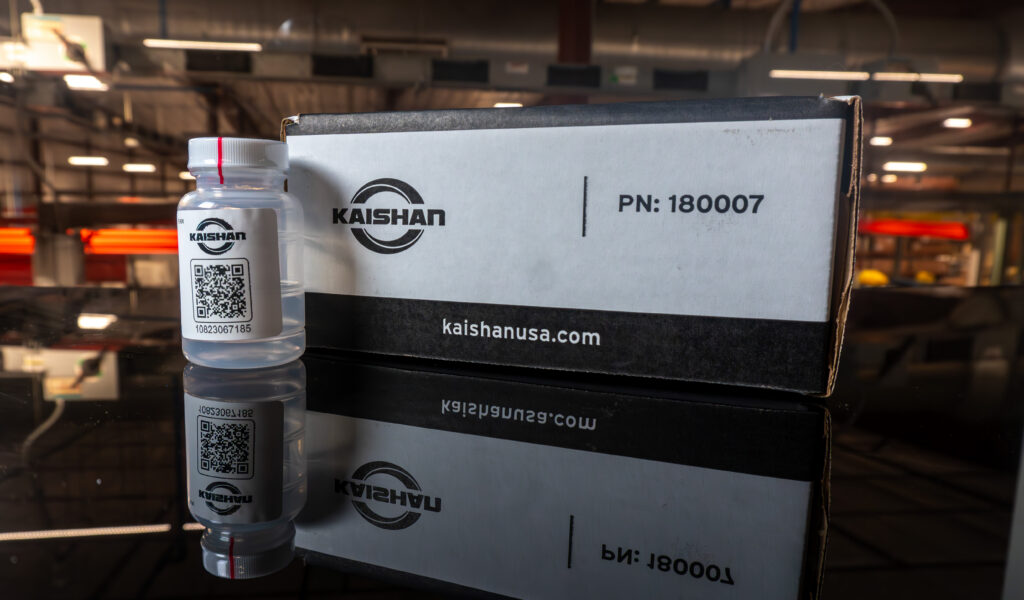
- Oil analysis (see Figure 2)
- Dewpoint
One possible exception to the “can’t see” rule is that new sensor systems, enhanced by the internet of things and artificial intelligence, may well be able to capture and evaluate measurements that are too subtle for a typical operator to perceive or allow you to act before an unplanned shutdown.
An interesting possibility is that a good operator may have a “gut feel” that something is going poorly but have no empirical data on which to base those observations. We may find that advanced measurement techniques sometimes validate the operator’s gut.
6. Keep it clean
You’ll want to apply the 5S principles across the plant floor. After all, keeping machines and the shop floor clean is one of the easiest steps you can take. And it doesn’t require the approval of the finance department.
Does “clean” matter? In some cases, it may be critical. In a cement plant, for instance, we’ve seen cement dust accumulate over time on machines and workstations.
That’s not simply unappealing; it’s a hazard, especially when that dust clogs the fins and coils of a heat exchanger cooling an air compressor, a variable-speed drive or any other equipment that requires heat removal.
Another example: cleaning up an air compressor oil leak. Keeping the floor clean not only eliminates a slip-and-fall hazard but also quickly alerts you to any oil leaks. If you haven’t cleaned up yesterday’s oil spill, you probably won’t be able to tell if the oil on the floor is new.
The 5S theory also extends to your compressor room and parts crib. You’ll want to eliminate excess inventory, especially obsolete parts or spares in your storeroom. More than one planned downtime has been unnecessarily extended because someone thought they had a usable filter in the stockroom but found that it only fit a compressor that’s now in a landfill
7. Only implement changes you can sustain
Your exciting new advance won’t do your company any good if it’s abandoned in a few months and your people revert to the “old way.” Not only is that a waste of time, but it’s also a black eye for your lean maintenance efforts.
So don’t take on something if you know it is not sustainable in your organization. Start small and scale.
8. Dig deeper
Don’t take the easy way out. Make sure you identify root causes.
A classic example from the compressed air world is oil carryover. You may notice a problem and send a crew out to change a downstream filter. Then, the problem recurs in a week or two.
In the case of oil carryover, the root cause could be several things: a clogged scavenge line, an overfilled oil reservoir, the use of a pirated part — such as a separator or filter — or even off-brand lubricants.
9. Pay attention
You can have all manner of sensors and devices, but if no one is paying attention to — and acting on — alerts, you’re not going to get to the promised land. All of this is pointless unless you act.
One essential lean process is visual observation. Watch for those visual cues. And, more importantly, keep your key performance indicators (KPIs) and alerts simple and easy to understand and obvious to anyone who walks by.
More than one company has saved a tremendous amount in expenses because a night watchman or a cleaning crew saw a flashing red light and reported it. So follow the “keep it simple” principle and keep your KPIs and alerts simple and easy to understand.
10. Don’t be too proud (or cheap) to ask for help
In the world of compressed air, we tell all our customers the best thing they can do to ensure the efficient operation and lifespan of their equipment is to work with a consultant or an expert who deals with these problems daily. You need someone you can rely on who can be there in your facility when you need help or can guide you in important decisions on upgrades and new acquisitions.
A solid relationship built on trust will more than pay for itself in the long run. The right consultant can help establish a lean maintenance program, identify the right KPIs to track, set up remote monitoring and chart a path to predictive maintenance. They’ll probably want to start with an air audit so everyone knows exactly where you stand.
Incorporating your CMMS
A computerized maintenance management system is the backbone of the lean process, because it captures all the data you need. But it’s not magic:
- First, you can’t analyze data that exists only on scraps of paper or in someone’s head.
- Second, it won’t work properly if you use it only for preventive maintenance scheduling.
The goal is to put all the data into the system and start the transition from preventive to predictive maintenance.