
There are practical strategies to boost compressed air efficiency –– through air audits, smart operating practices and proactive maintenance.

Air compressor insights
- Regular audits uncover leaks, misuses and other inefficiencies.
- Proactive maintenance including filters, drains, leak repairs and daily inspections keep systems efficient and reliable.
- Smart operation strategies, such as matching compressor supply to demand, avoiding excessive cycling and shutting down idle units help to save energy.
Compressed air has often been called the fourth utility, after electricity, water and natural gas. According to the U.S. Department of Energy, electricity accounts for more than 75% of the total life cycle costs of an individual compressor. That means the bulk of what facilities spend on compressed air is tied to energy –– not equipment or maintenance.
Yet in many manufacturing operations, compressed air can also be one of the least efficient utilities. Although most modern rotary screw air compressors are engineered to be highly efficient, common issues like leaks, poor system design, improper maintenance and inefficient operation often waste significant amounts of energy. In some facilities, more than half of the compressed air produced never gets used.
The good news? There are proven ways to boost compressed air efficiency –– improving both system performance and the bottom line. From air audits and proactive maintenance to optimizing compressor turndown and reclaiming waste heat, there are many opportunities to reduce costs while also extending the life of the compressed air equipment.
Boosting compressor efficiency with an air audit
The foundation of any efficiency-boosting effort is understanding how the system is performing. This is where an air audit can help inform efficiency opportunities.
An air audit is essentially a health checkup for a compressed air system, measuring how much air is being generated, how it’s being used and where it may be wasted. There are two ways of auditing a system: supply-side and demand-side. Supply-side audits look at how a compressor, dryer and filters are performing –– this includes compressor sizing.
Conversely, demand-side examines how air is distributed throughout the manufacturing operation. This can often uncover hidden problems such as leaks, misapplied air tools or inappropriate uses of compressed air, like blowing off debris instead of using brushes or vacuums.
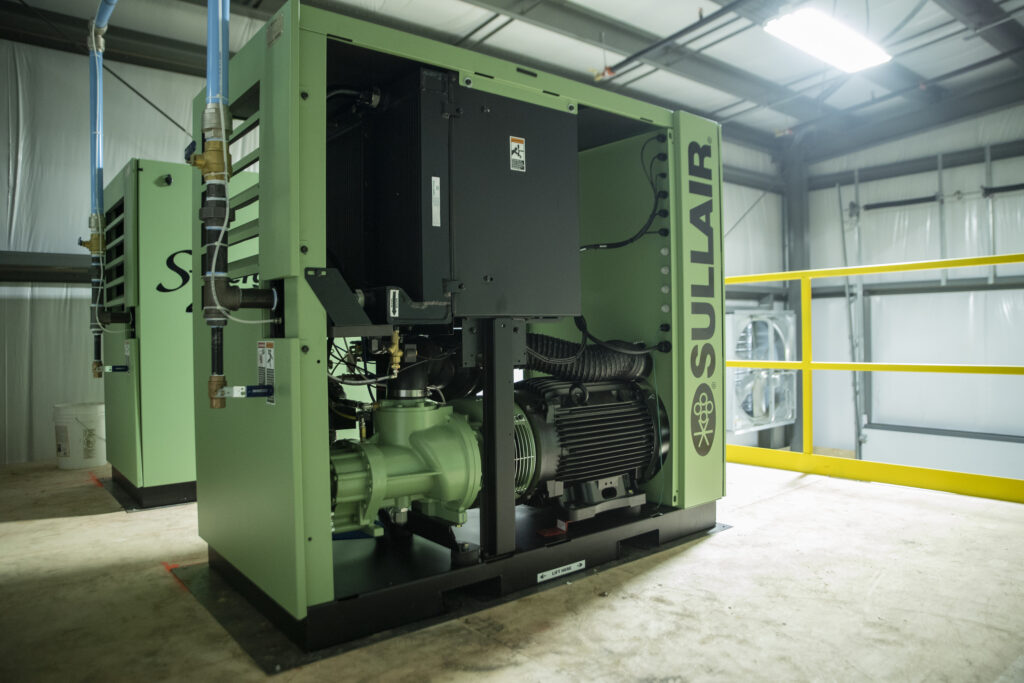
Regular audits are one of the best ways to uncover savings, often revealing complex problems hidden to the untrained eye. Audit-based action plans can cut maintenance costs by as much as 60% and reduce electrical costs by up to 50%.
The best time to audit a system is whenever a facility adds, removes or replaces equipment or when manufacturing patterns change, like adding a second shift. Even without these major changes, it’s still important to schedule an air audit every three to five years.
Operate smarter: compressor turndown and efficiency
Small operational changes can make a big difference when it comes to efficiency. Oversized compressors waste energy, while undersized machines can’t keep up with demand. Operating too far outside the compressor’s optimum efficiency range can also backfire.
Rotary screw compressors are designed with an ideal speed range for maximum efficiency and performance. If the compressor operates too slowly or too quickly, efficiency drops –– and in some cases, equipment life may be compromised. Consequences can include increased energy usage, hot air backflow and overheating risks and premature coating wear on rotors in oil free rotary screw compressors.
To address these challenges, some facilities find the best solution is a combination of compressors –– a base-load machine running steadily at high efficiency, paired with a smaller trim compressor that handles variable demand. This prevents larger machines from inefficiently cycling on and off.
Variable speed drive compressors are widely used as primary compressors where less air is needed or as a secondary compressor as mentioned above because they can adjust output to match plant demand.
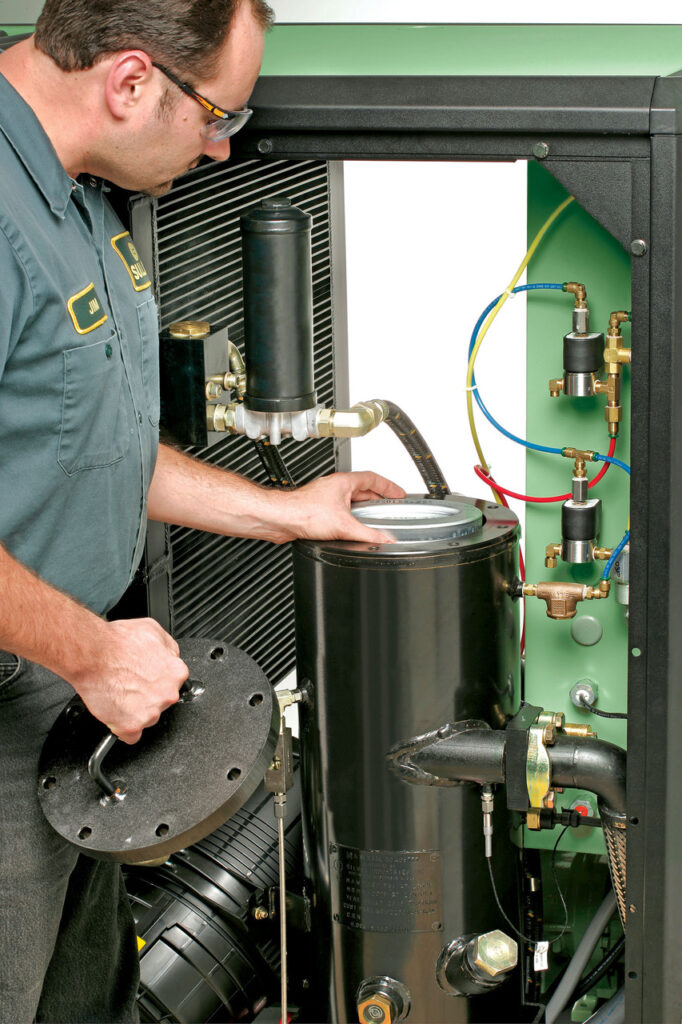
However, not all turndown ranges are created equal. Always look beyond original equipment manufacturer marketing claims and check Compressed Air and Gas Institute data sheets when evaluating compressor efficiency, paying particular attention to specific power. Specific power indicates how much power must be used for each cubic foot per minute (cfm, measured in kilowatts or kW per 100 cfm). The higher the specific power, the more caution should be taken, because a plant will need more kilowatts and pay more money to obtain the same amount of air.
Other smarter operating tactics include turning off compressors when idle. Much like “phantom energy” from electronics left plugged in at home, idle compressors can still draw power even when not in use. Shutting them down during evenings, weekends or long breaks prevents waste.
Finally, compressor room temperature also plays a role in efficiency. Compressors perform best in well-ventilated spaces with minimal dust and stable temperatures. Conversely, poor room conditions force compressors to work harder and reduce efficiency.
Don’t overlook pipes, valves and fittings
Leaks in pipes, valves and fittings are among the most persistent efficiency killers. Studies suggest that up to a third of compressed air is lost to leaks, forcing compressors to run longer and harder to maintain pressure. Even a seemingly minor leak can translate to thousands of dollars annually in wasted energy.
The following are estimated additional costs for operating a compressor with air leaks. The calculations are done at $0.0771 kW hours (kWh) operating 8,000 hours/year.
- Compressor using 200 cfm at 325,000 kWh/year: $27,139/year
- Compressor using 300 cfm at 528,000 kWh/year: $40,709/year
- Compressor using 400 cfm at 704,000 kWh/year: $54,278/year
*Bob Vavra of Plant Engineering
One of the best ways to manage leaks is to check the system annually. Ultrasonic detectors are great at locating smaller leaks that are inaudible to the human ear. Once a leak is found, don’t walk away too quickly –– tagging and prioritizing the leak will aid repair efforts and ensure all leaks are addressed appropriately.
Beyond pesky leaks, piping layout and size can impact efficiency. Discharge piping should never be reduced below the compressor outlet size. Upsizing piping is often beneficial because it reduces pressure losses. Piping should also be set up to minimize sharp 90-degree elbow turns with sweeping bends or radius fittings used wherever possible.
Piping connections and materials are also critical; tying into the top of a main header prevents piping from acting like a drip leg and forcing condensation back toward the compressor. And choosing the right material for an application should be carefully considered. Aluminum piping is lightweight, noncorrosive and easy to install. Galvanized steel and copper may also be used, though each has trade-offs. Older iron pipes should be replaced, as corrosion buildup from moisture restricts airflow over time.
And do not forget about valves. A three-valve bypass around filters and dryers allows equipment to be serviced without shutting down the entire system. Installing auxiliary ball valves in strategic locations also makes it easier to connect rental compressors during planned or emergency maintenance.
Improving compressor efficiency through maintenance
No compressor efficiency article is complete without mentioning the importance of proper maintenance. Compressed air systems are generally only as good as the care they receive. Proactive and predictive maintenance not only prevents downtime but ensures a compressor runs at peak efficiency. The basics include:
- Filter replacement: Inlet air filters prevent dirt and dust from entering the compressor. A clogged filter forces the compressor to work harder, increasing energy costs. Replace quarterly or as recommended by the manufacturer.
- Oil sampling and fluid replacement: For lubricated rotary screw air compressors, testing oil quality helps spot potential issues early. Fluids should typically be replaced annually –– or sooner in harsh environments.
- Drain management: Moisture is an unavoidable byproduct of compressed air. Installing reliable drains (such as zero-loss drains) ensures water is removed without wasting air. Neglected drains often stick open, leading to costly leaks.
Reclaiming waste energy for added efficiency
Even the most efficient compressor converts most of its input energy into heat –– up to 90% to 95% of the electrical energy consumed by a compressor ends up as heat. Heat vented to the atmosphere by a compressor can be used for facility heating, preheating boiler feedwater or providing process heat for cleaning, drying and other applications.
Similarly, moisture extracted from compressed air can often be reclaimed as gray water for nonpotable uses, such as irrigation or certain washdown processes. While this approach is not suitable for every plant, water recovery can be particularly beneficial in areas with high water costs or restrictions.
Recapturing and using waste heat and/or water adds efficiency by reducing utility bills and potentially improving sustainability metrics.
Measuring and tracking savings
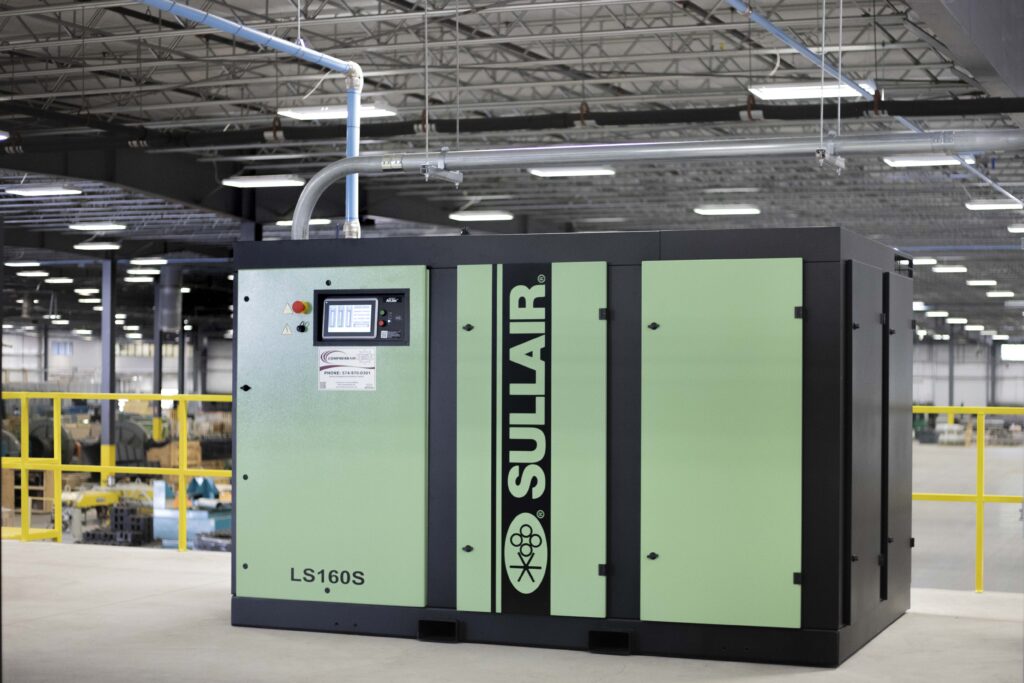
Implementing efficiency measures isn’t enough. It’s important to collect and analyze the results of these efforts. Monitoring platforms and energy management tools provide a 360-degree view of system performance, helping plants quantify energy savings. Regularly reviewing performance data also enables continuous improvement. As operating conditions and facilities need change, system optimization should evolve too.
Compressed air is a critical utility in many plants –– and it’s one of the most manageable. By combining audits, proactive maintenance, smart operating practices and recovery systems, a facility can cut energy costs, extend equipment life, reduce downtime and improve sustainability. The key is recognizing that efficiency is not a single project but an ongoing process –– one that pays dividends in performance, reliability and long-term savings.