Manufacturing maintenance professionals should understand valves and seals within compressed air systems.

Learning objectives
- Learn about the various types of valves and seals used in a compressed air system.
- Review predictive maintenance programs for valves and seals within a manufacturing facility.
- Understand the potential consequences of component neglect and improper form, fit and function.
Compressed air insights
- As compressed air systems become more complex, proper sizing, valve selection and routine maintenance remain critical to controlling efficiency, reliability and energy costs in compressed air operations.
- Effective compressed air management depends on understanding valve functions, seal materials, predictive maintenance and the risks of improper control or non-OEM components, all of which can significantly impact performance and life cycle costs.
Compressed air systems are getting more complex as technology advances. However, new technology still requires a basic service and maintenance routine. Learn to effectively and efficiently control these systems, specifically valves.
There are many types of valves in compressed air systems: solenoid valves, blow-down valve (BDV), pressure regulators, pressure relief valves (PRV), minimum pressure control valves (MPCV), inlet valves, shuttle valves, check valves, thermal valves and more. Each of these components serves a specific function to ensure the equipment runs as designed.
One of the most common issues with compressed air systems is proper sizing of the air compressor, air piping and receiver. All the valves listed above are subject to premature failure due to high load/unload cycle counts or running unloaded for an extended amount of time.
In terms of modulation, lack of inlet modulation is a common service call. We find one valve failure can cause other valves to fail — usually seal and diaphragm failures in the control system are the culprit. A pressure regulator out of adjustment or worn diaphragm can cause control components to wear prematurely due to high load/unload cycle count. The results are often expensive repair costs along with efficiency decline.

Inlet modulation can provide significant energy savings over time. Failed and/or neglected compressor control valves can lead to high energy costs.
Important valves in compressed air systems
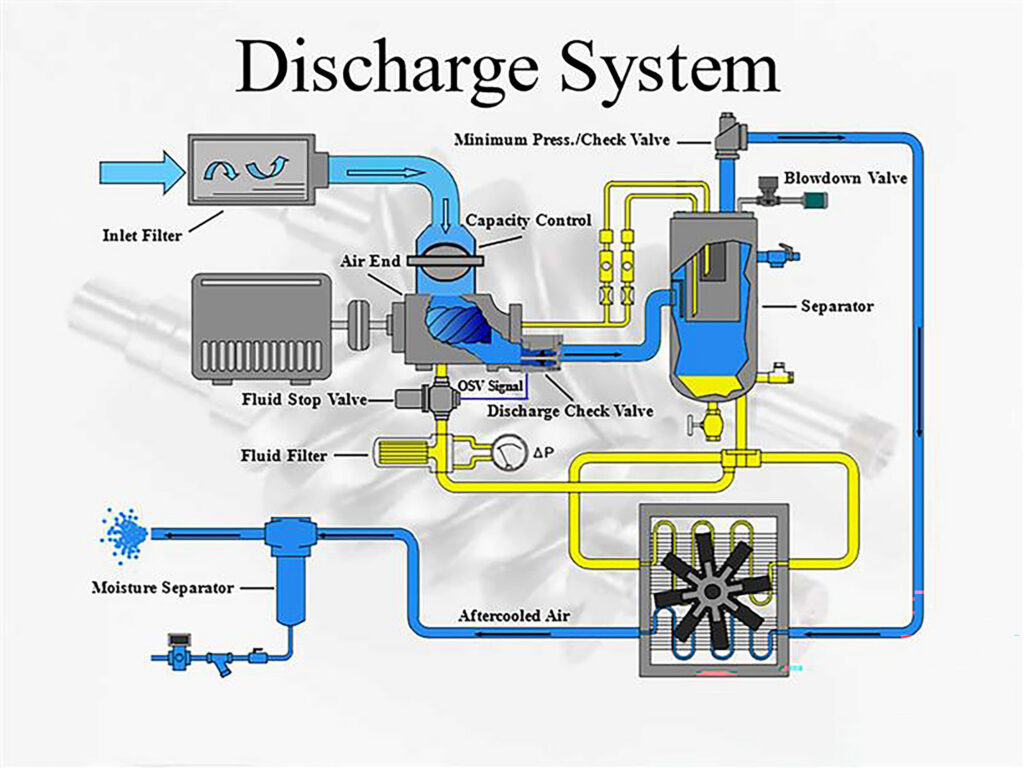
The MPCV in a compressor system is no doubt one of the most important control valves on a compressor. All of the control valves play an important role, but this one can make or break the operation like no other. Due to its location, the MPCV is exposed to the worst conditions in the control system.
Every cubic foot of air per minute that feeds a process passes through this valve. The compressed air in this location of the discharge system is hot and humid. The valves, seals and related components in this area are susceptible to scale and corrosion. Depending on the application, the condition of the MPCV can deteriorate at an alarming rate. A good maintenance routine to service this MPCV will provide years of reliable control. An MPCV serves two purposes:
- Prevents sump tank pressure from dropping below the minimum required to maintain safe cooling and lubrication flow.
- Prevents back flow of plant air to the sump.
The BDV is probably the second most important valve on the compressor package for system control. With each load cycle, there is a chain of events that occurs: when a load signal is initiated, load solenoid changes state, inlet valve opens, BDV closes, MPCV opens, flow and pressure increases. As pressure reaches the unload setpoint, inlet valve modulation has reached its maximum and the reverse occurs: load signal drops off, control solenoid changes state, inlet valve closes, MPCV closes and the BDV dumps all the hot humid air to the atmosphere. Without a properly functioning BDV, there is risk of over loading the drive motor, over pressurizing the plant and lifting the PRV (see Figure 2).
Controlling a compressed air system
Advancements in control and monitoring technology of compressed air systems can greatly improve efficiencies. These advanced systems can provide early warnings of control issues that can be addressed quickly.
Compressed air is considered the fourth utility, behind electricity, water and gas. However, compressed air is completely in control of the manufacturing facility, unlike the other three. How you control compressed air systems can make a huge difference in cost of operation. Start by doing some basic evaluations:
- For new compressor applications, evaluate projected demand. Determine the production equipment required cubic feet per minute to operate, determine compressor type and size and determine receiver tank size. Downstream filtration should also be factored in.
- Have an air audit performed on an existing system. Processes likely have changed over the years or leaks have developed in the system. Air audits will reveal how the compressor is running over a period of time. The return on investment of an air audit can be quick.
- Control valves, such as inlet, blow down, MPCV and load solenoid should be maintained periodically to ensure the most robust, efficient and reliable system as possible.
- Compressors with inlet valve modulation and variable displacement should be considered if demand fluctuates drastically from shift to shift. Variable speed drives are also options along with the above control methods.
Paying attention to a manufacturing process changes and compressed air demand is key. Plant air demands come and go as production changes. For new compressor sizing, contact a local distributor for an air audit to find the best compressor for an application.
Understand seal materials
Knowing the difference in available seal materials is crucial when selecting a replacement component. The manufacturer has already completed the homework for you in selecting a component with the proper seal material. Therefore, pay attention when selecting original equipment manufacturer (OEM) versus non-OEM replacement parts. Cheaper is almost never better.
Buna is a popular seal material in the compressed air industry. One question that comes up regularly: is it Buna or Buna-N? Which is it?
Manufacturers of components sometimes drop the -N when adding descriptions to their component seal material. Buna and Buna-N are often used interchangeably to indicate the material used is a synthetic rubber.
However, there is a name distinction within the Buna family:
- Buna-N (Nitrile rubber) is made from butadiene and acrylonitrile. Buna-N is known for its excellent chemical resistance properties used in seal, gasket and hose applications.
- Buna-S (styrene butadiene rubber) is made from butadiene and styrene. Buna-S is known for its abrasion-resistant properties such as tires, conveyor belts and use in high-temperature applications.
Other common seal materials found in the compressed air industry are ethylene propylene diene monomer (EPDM) and Viton.
- EPDM is also a synthetic rubber made from a specific combination of polymers. This material offers strong outdoor-element and ultraviolet resistance, making it useful for roofing materials and automotive parts.
- Viton is a high-performance synthetic rubber called Fluoroelastomer (FKM). Viton is available in three grades: Viton A, B and F. These different grades of Viton indicate the difference in fluorine content. The higher the fluorine content, the greater the resistance to harsh chemicals such as acids and solvents. Viton is a great material for valves and seals exposed to chemicals, oils and high temperatures up to 400°F.
Seals have a finite lifespan in any application. Seals are often referred to as “soft goods” and can be in the form of O-rings, gaskets, lip seal, U-cup, V-ring, mechanical, labyrinth and carbon ring seals, just to name a few. Typically, seals are used to contain process air, oil or gas to a certain design specification.
Compressed air predictive maintenance
Seal and valve failures are most often caused by normal wear and tear. Seal degradation can be detected by oil visibly leaking at the compressor package or fouling downstream production equipment.
To prevent failures, a maintenance program should be proactive and predictive. Take the following measures to help avoid any potential seal/component failures:
- Oil sampling: This will help provide early warning signs of caustic, contaminated conditions. These conditions can cause seals to swell, crack and wear.
- Vibration measurements: This predictive maintenance tool can detect issues far in advance and may provide insight into other component failures.
- Following manufacturers’ maintenance recommendations: This is key to a reliable compressor system. Typically, the “soft goods” can be replaced during routine maintenance service calls. Scheduled maintenance downtime is far less expensive than in-service downtime.
There really are no definitive cut-in-stone maintenance procedures. Each compressor application has its own unique maintenance challenges. Yes, timers can indicate when to change fluid and filters, but there are so many other opportunities to increase the reliability of your compressor system.
The state of a compressor room makes a difference too. There are consequences for installing an investment in adverse conditions. Dirt-clogged heat exchangers will increase compressor discharge temperatures and initiate fluid degradation. These conditions can shorten the life of valves and seals in your compressor control system. Fluid degradation and increased acid levels will attack seals and sealing surfaces, bearings and heat exchangers.
OEM versus non-OEM parts
The topic of OEM versus non-OEM parts includes both valves and seals. The equipment manufacturer designs compressor packages to meet certain specifications. Flows, pressures and temperatures are taken into consideration when components are selected for the package design. Changing the design specifications of equipment can be detrimental.
Valves are typically actuated with an air signal or electric input from a control device, pressure switch, controller or a programmable logic controller. Installing a non-OEM valve can lead to performance and reliability issues. Many service calls are generated when someone has cut corners and ordered components online and they just didn’t work out.
For example, in BDVs, these valves are selected by temperature, pressure and flow by the manufacturer’s specification. There are many suppliers that will sell a valve with similar form and fit but that does not function as it’s intended. Installing a BDV that has the incorrect flow can cause control issues, create a short-cycle condition or create an over-pressure condition during unload. This can cause components such as inlet valves, control solenoids, pressure switches and minimum pressure valves to have excessive wear.
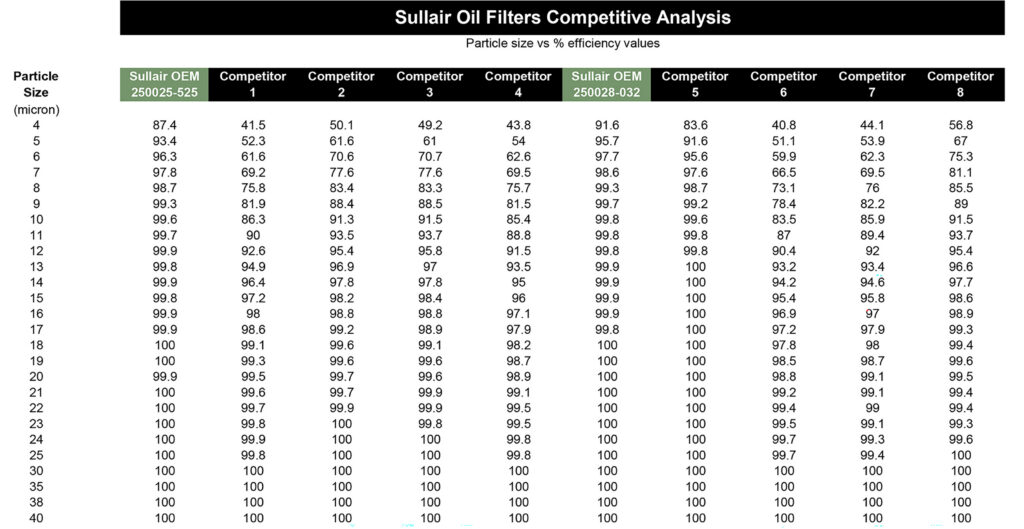
Oil condition and sampling are also a part of the OEM conversation. Contaminated oil can create havoc in a compressor system. Oil foaming and carry-over can damage downstream equipment, and high particle counts can wear out seals and damage bearings. Additionally, there are many pirate parts being sold online. Oil filters are easy to duplicate but may not perform to the same standard (see Figure 3). A valve or seal manufacturer might ask, “Are you using OEM parts and fluids?”
Understanding the roles of various valves and seals and the consequences of neglecting them can reveal opportunities to optimize the reliability and lifespan of a compressed air system. With proper maintenance, correct component selection, and attention to routine service requirements, these critical parts can perform as designed and help maintain system efficiency. Take a moment to look over a compressor system with fresh eyes — maintenance teams may spot an opportunity to boost performance before small issues become big ones.