George T. Hall Company is the winner in the under $10 million system integration revenue category.
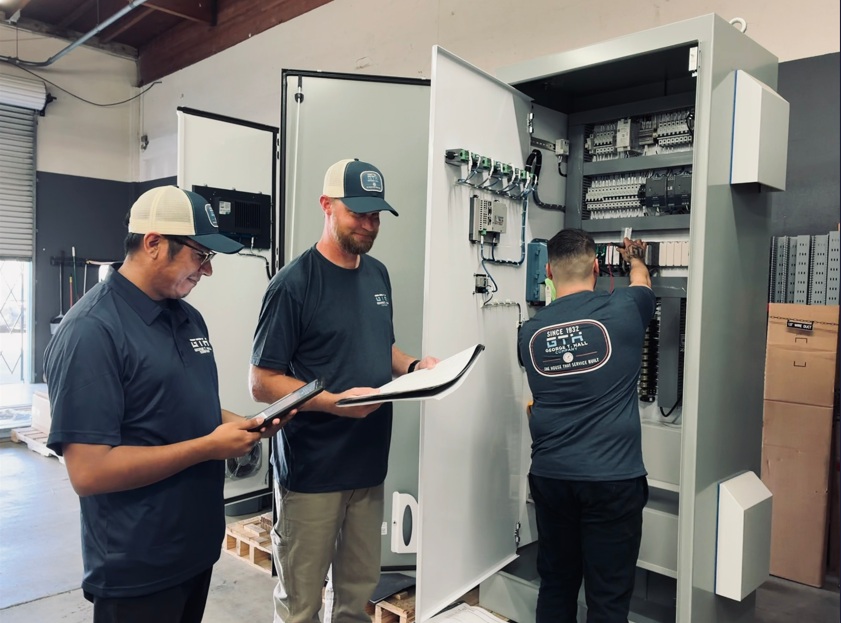
George T. Hall Company is the 2027 System Integrator of the Year award winner in the under $10 million system integration revenue category. Modernizing infrastructure, continuing education, software defined automation and multiple system integration approaches are among topics discussed.
What information in your application were you particularly proud of with your team?
There are several accomplishments highlighted in our application that we’re particularly proud of, but our people are at the center of them. The Hyperion MBR Pilot Facility and Chino Hills 1,2,3-TCP Treatment Project are two examples. While we’ve had success across many projects and industries, these projects demonstrate our team’s technical expertise in water and wastewater, particularly when it comes to modernizing infrastructure and integrating complex control systems. Both required our engineers to integrate multiple technologies and systems to solve operational challenges, which reflects the kind of work our team does exceptionally well.
We’re equally proud of the investment we’ve made in developing our employees and expanding our technical capabilities. We place a strong emphasis on continuing education, manufacturer certifications, mentorship, and opportunities for employees to grow their expertise. One accomplishment we’re particularly excited about is achieving Schneider Electric EcoStruxure Automation Expert (EAE) certification. We have two engineers specifically dedicated to developing this capability, and we’re currently working on an EAE-based project that is on track for completion in 2026. It’s an exciting example of how our investment in professional development is translating into new capabilities and practical applications for customers.
Another point of pride is the relationships our team has built over the years. The customer recommendation letters included with our application reflect long-standing partnerships, repeat business and the trust our customers place in our people. We value those relationships, along with the partnerships we’ve developed with our technology vendors, because they speak to something beyond the successful completion of individual projects. They reflect the technical knowledge, responsiveness and commitment employees bring to their work.
Ultimately, we’re proud of what our team accomplishes, but we’re just as proud of the people behind those accomplishments and the culture that allows them to continue learning, growing and taking on new challenges.
What are some stand-out projects you’ve worked on recently?
Two projects we’re particularly proud of were highlighted in our application and demonstrate our expertise in modernizing water and wastewater infrastructure and integrating complex automation systems and a third highlights a certification we’re proud to hold and apply the solution to a project for one of our customers.
Can multiple vendor process systems integrate into one control environment
The Hyperion Membrane Bioreactor (MBR) Pilot Facility in Southern California is another project that demonstrates the complexities of integrating independently designed process systems into a common control environment. Developed in support of the Pure Water Los Angeles program, the facility was intended to evaluate advanced water treatment technologies as part of the city’s broader water reuse efforts.
The challenge was integrating three separate vendor-packaged MBR systems, each with its own PLC, control logic, and operating requirements, into a single, coordinated facility. While each packaged system was designed to perform its own process functions, the facility also needed consistent communication, monitoring, alarm management, and coordination with the existing plant-wide control system.
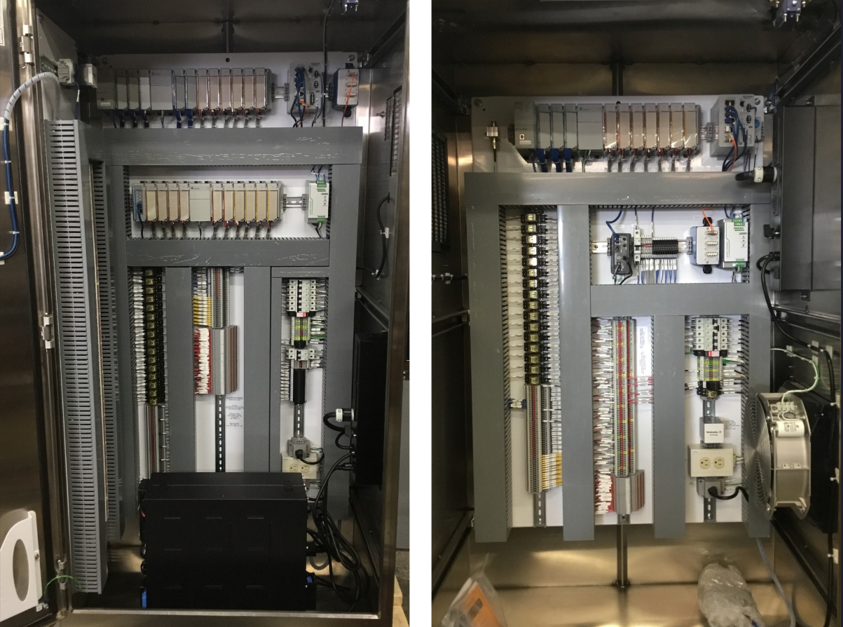
For GTH, the engineering decision was to establish a centralized control architecture without unnecessarily replacing or redesigning the individual vendor control systems. The objective was to preserve each package’s intended functionality while creating a common interface through which the systems could operate within the larger facility. As the design-build controls integrator, GTH designed and delivered a main PLC control panel to serve as the facility’s master controller. Our engineers developed the logic needed to coordinate process sequencing, interlocks, alarms and performance monitoring across the three vendor systems. We also established the communications architecture connecting the packaged equipment to the plant’s existing supervisory control environment, including standardized data structures and alarm handling to support consistent reporting.
The scope extended beyond programming and communications. GTH supplied and integrated process instrumentation for flow, level, pressure and analytical measurements, performed instrument calibration and loop verification and conducted factory and site acceptance testing. Our team also supported system startup, troubleshooting, control tuning, operator training and final documentation.
What made this project successful was the ability to bring three independently developed process systems into a unified, maintainable automation environment while preserving their individual functionality. The resulting architecture provides consistent plant-level control, monitoring and reporting without requiring the facility to manage three separate approaches to integration. For GTH, the project reinforces an important principle in system integration: connecting equipment is only one part of the challenge. The greater engineering value often comes from establishing how different systems communicate, coordinate and operate reliably as part of a larger process.
How can controls modernization and system integration help?
The Chino Hills 1,2,3-Trichloropropane (TCP) Treatment Project in Southern California is an example of how controls modernization and system integration can support the restoration of critical water infrastructure. Following California’s adoption of a more stringent drinking water standard for 1,2,3-TCP, the city was required to take six groundwater wells out of service. Returning those wells to operation required more than constructing a new treatment facility. The city also needed to coordinate geographically separated well sites, aging control systems, treatment processes, booster pumping and its existing water distribution infrastructure.
The engineering challenge was that these systems could not operate independently. Groundwater production needed to be coordinated with treatment capacity and downstream distribution demand, while maintaining the monitoring and safeguards necessary for drinking water operations. The existing well sites also relied on legacy control equipment that needed to be modernized and integrated into the city’s supervisory control environment.
GTH was brought in to provide the controls and system integration expertise needed to connect these systems. Rather than treating the wells, treatment facility and booster station as separate automation projects, the approach was to develop a coordinated control architecture that could manage the movement of water from its source, through treatment and into the distribution system. Our scope included the design, fabrication, programming, commissioning and integration of PLC-based control systems, process instrumentation, wireless communications, and Ignition SCADA applications. GTH modernized the remote well-site controls, developed the treatment plant automation and established communications between the six wells, the treatment facility, Booster Pump Station B-9 and the District’s existing SCADA system.
The treatment process incorporates cartridge filtration, multiple granular activated carbon (GAC) treatment trains, chemical dosing and booster pumping. The treatment PLC coordinates these processes with upstream well flows and downstream distribution requirements. Instrumentation and control logic support monitoring of treatment conditions, equipment operation and process alarms, including protective responses when operating conditions fall outside established requirements. The project also required integration across multiple locations and generations of technology. By establishing a unified control architecture and consistent SCADA visibility, GTH helped bring previously separate systems into a coordinated operational environment.
The completed treatment facility became fully operational in April 2026 and has the capacity to treat approximately three million gallons of groundwater per day. This allows the city to return local groundwater resources to service and reduce its reliance on purchased imported water.
What makes this project particularly meaningful is the relationship between the controls work and the larger infrastructure objective. The treatment facility addresses the water-quality challenge, but successful operation depends on coordinating water production, treatment, pumping and distribution. The project demonstrates how modernization and integration of existing infrastructure can help utilities restore critical resources while establishing a more consistent and maintainable operating environment.
How are you working with customers to modernize legacy infrastructure?
Another project we’re particularly proud of involves modernizing the control system for a private residential community in California’s Sierra Nevada mountains, approximately 50 miles northwest of Truckee. The community had been struggling to operate and maintain an aging control system consisting of a patchwork of PLCs, proprietary control platforms and a rudimentary HMI. Over time, the combination of different technologies and aging hardware had made the system increasingly difficult to maintain and modernize. Because the existing control applications were developed on legacy hardware and needed to be rewritten, GTH saw an opportunity to evaluate a different approach to the overall control architecture. Rather than replacing the existing equipment with another collection of hardware-dependent control systems, the objective was to establish a more flexible foundation that would better accommodate future changes.
GTH selected Schneider Electric’s EAE software-defined automation platform based on the IEC 61499 standard. This approach separates the control application from the hardware on which it operates, allowing the software to run on different compatible platforms, including industrial PCs. For an application with multiple aging and proprietary systems, reducing that hardware dependency was an important consideration.
The community’s existing Ignition SCADA system already operates on an industrial PC, making this architecture particularly relevant. EAE provides the flexibility to run control applications on industrial PC hardware, creating the possibility of hosting the control and SCADA applications on shared computing resources rather than maintaining separate dedicated control hardware. The architecture also supports redundancy options using a computer at another location, offering additional flexibility when planning for system reliability. Beyond the immediate modernization effort, the longer-term value is in how the system can be maintained and expanded. A hardware-independent approach can reduce the need to rewrite control applications each time equipment reaches the end of its useful life, while making future additions and upgrades easier to manage and deploy. What makes this project particularly interesting to us is the opportunity to address a familiar challenge in industrial automation from a different perspective. Aging infrastructure is often approached as a hardware replacement problem, but in this case, reconsidering the control architecture itself provides a path toward greater flexibility and long-term maintainability.
Our primary markets include water and wastewater; mining, minerals, and metals; aerospace; industrial manufacturing; and food and beverage. Across these industries, our focus is on delivering reliable, maintainable automation systems that support long-term operational performance.
What are some methodologies and philosophies used for projects? How are they evolving?
At GTH, our approach combines structured project execution with a customer-focused philosophy. We emphasize understanding the application, managing risk, maintaining quality and delivering systems that provide lasting operational value. Our Project Management Office supports consistent execution through established processes, tools, and documentation. Centralized project tracking, resource planning and visibility into project progress help our teams coordinate work, manage responsibilities and make informed decisions.
Quality and continuous improvement are equally important. GTH is certified to ISO 9001:2015 by DQS and has maintained CSIA certification since 2017. These standards reinforce our commitment to documented processes, accountability and continuous improvement. Our formal Nonconformance Reporting (NCR) and corrective-action process helps us identify recurring issues, investigate root causes and implement improvements intended to prevent recurrence.
From a technical perspective, we also emphasize risk-based modernization. When appropriate, we implement upgrades in planned stages to minimize operational disruption while preserving useful investments in existing infrastructure.
Our methodologies continue to evolve as technologies advance and project requirements become more complex. We regularly evaluate feedback from customers and employees, identify opportunities to improve our processes and invest in tools that make project execution more consistent and transparent. Ultimately, our objective is to combine the discipline of standardized processes with the flexibility needed to address each customer’s unique application.
How have customer expectations for projects changed? How do you address anticipated or unexpected changes?
Customer expectations have evolved beyond the technical performance of the finished system. While reliability, quality and on-time delivery remain essential, customers increasingly expect greater transparency throughout the project lifecycle, including clear communication, visibility into progress and proactive management of potential challenges. They also recognize the value of having information readily available to support more informed decisions. As a system integrator, we believe it’s important to apply the same technologies and integration principles to our own operations that we recommend to customers. One example is an internal initiative developed to improve how we manage and monitor projects across our organization.
The idea originated when our Digital Manufacturing Systems Manager attended Inductive Automation’s Ignition Community Conference (ICC) and identified an opportunity to bring together information from systems our teams were already using. Rather than requiring employees to navigate multiple platforms to understand project status, we developed an integrated dashboard connecting our Acumatica enterprise resource planning (ERP) system with ClickUp, our project management platform, using Ignition as the visualization interface.
The resulting application gives teams working across three states a shared view of work in progress (WIP), bringing materials management, labor budgets and project tasks into one accessible environment. By connecting information that previously resided in separate systems, we’re improving internal visibility and coordination while making it easier for our teams to identify potential challenges and make informed decisions as projects progress.
This initiative also demonstrates an approach we can offer our customers. Many industrial organizations face similar challenges, with operational, financial and project information distributed across multiple software platforms. Integrating those systems can provide a more complete picture of operations without necessarily replacing the applications they already rely on. Whether the objective is improving project visibility, monitoring production performance or connecting business information with plant-floor activities, the underlying principle is the same: making existing data more accessible and useful.
Of course, technology alone doesn’t address every challenge. Supply chain constraints, evolving project requirements and unexpected technical issues still require communication, collaboration, and flexibility. The GTH Project Management Office, standardized workflows, and continuous improvement processes help us respond to these changes while maintaining accountability and keeping customers informed. Ultimately, we see transparency and communication as essential parts of successful project execution. Our investment in better-connected internal systems reflects both our commitment to meeting those expectations and our belief that system integration can create meaningful improvements well beyond the plant floor.
How important is it to develop long-term relationships with customers during projects and why?
Developing long-term relationships with our customers isn’t simply a business strategy at GTH. It’s part of our company’s identity. As we celebrate our 95th anniversary in 2027, we reflect on the commitment to customer service that has been at the heart of our business since 1932. Our motto, “The House that Service Built,” reflects a philosophy that has guided us throughout our history and continues to shape how we operate today.
We believe successful partnerships are built on trust, technical expertise, accountability and a genuine commitment to understanding each customer’s unique needs. In system integration, those relationships are especially important because no two facilities or applications are exactly alike. Understanding a customer’s processes, operational challenges and long-term objectives allows us to develop solutions tailored to their needs rather than taking a one-size-fits-all approach.
But for us, building those relationships goes beyond delivering a successful project. The end of a project doesn’t necessarily mean the end of a customer’s need for technical support. Facilities evolve, equipment ages, processes change and new challenges emerge. Customers need a partner who understands their systems, is familiar with their operations, and can help them make informed decisions over time. Maintaining those relationships allows us to continue supporting customers through maintenance, modernization, troubleshooting and future improvements.
Our people are what make that level of service possible. We place tremendous value on building a workplace where employees feel respected, supported and encouraged to grow. Our culture emphasizes mutual respect, accountability, integrity and continuous improvement. We believe that when employees are invested in their work, supported in their professional development and proud of the organization they represent, that commitment naturally extends to the customers they serve.
Continuity matters. Many of our employees have spent a significant portion of their careers with GTH, developing deep technical expertise and relationships that carry forward from one project to the next. Customers benefit from working with people who understand their facilities, remember the challenges they’ve faced, and take personal responsibility for the quality of the work they deliver. Those relationships create a level of familiarity and trust that cannot be established through one transaction.
Many of our customer relationships span decades, and the recommendation letters included with our application reflect the trust and confidence those customers have placed in our team. We’re proud that customers continue to choose GTH, not simply because of our technical capabilities, but because they know our people, trust our work and can depend on us to stand behind what we deliver.
As we reflect on 95 years in business, we recognize that our longevity is not the result of any single project, technology or accomplishment. It’s the result of generations of employees who have carried forward a commitment to quality, service and doing right by our customers. Technologies will continue to change, and our capabilities will continue to evolve, but the relationships we build and the values behind them will remain central to who we are.
Have current events affected current and future projects in a significant way? If so, how?
The industrial automation landscape continues to evolve as manufacturers and industrial facilities seek greater connectivity, operational visibility and better ways to use data to improve performance. These changes are influencing both the technologies our customers are adopting and the expertise required to support them.
At GTH, we’re investing in capabilities that address these changing expectations, particularly in smart manufacturing, overall equipment effectiveness (OEE) and manufacturing execution systems (MES). In 2025, we established a digital manufacturing systems manager position to help expand our expertise and develop new business opportunities in these areas. That investment is already influencing how we engage with customers. Conversations that previously focused primarily on automation and control systems are expanding to include production performance, operational data and opportunities to improve manufacturing efficiency. OEE and MES have become natural extensions of our existing customer relationships where the applications support those capabilities.
We’re also exploring how artificial intelligence can improve our internal engineering workflows, including extracting and organizing project information, supporting code generation, testing and documentation. These initiatives are in development, and we see them as opportunities to improve efficiency while maintaining the engineering oversight and quality standards our projects require.
Addressing the industry’s evolving skills requirements is equally important. We invest in training our existing workforce, identifying emerging skills gaps, and recruiting talent with complementary technical expertise. Our goal is to ensure our people have the capabilities needed to support both today’s projects and the technologies our customers will adopt in the future.
What do you do to help guide younger engineers in projects? What education do you suggest, provide or require?
At GTH, we believe developing younger engineers requires a combination of hands-on experience, mentorship and continued technical education. We emphasize learning from experienced team members while providing opportunities for younger engineers to develop practical problem-solving skills and gradually take on greater responsibilities through real-world project experience. Our approach includes intentional mentorship, cross-training, and job shadowing, allowing employees to learn from colleagues with different technical backgrounds and areas of expertise. We also work to identify individual strengths, career interests, and skills gaps so development opportunities can be aligned with both the employee’s professional growth and the technical capabilities our projects require.
Continuing education is an important part of that development. GTH invests in company-funded technical training, manufacturer certification programs, industry workshops, and work-related courses to help our engineers remain proficient as automation technologies evolve. We encourage employees to expand their expertise across different control platforms and emerging technologies while developing the skills needed to take on increasingly complex projects. Our goal is to help younger engineers build the knowledge, confidence, and technical proficiency necessary to support both the projects we’re delivering today and the technologies of the future.
Please share a long-term goal for the company
As GTH approaches its 95th anniversary, one of our long-term goals is to expand our expertise and capabilities in digital manufacturing, particularly in MES, OEE and data-driven operational improvements. We see this as a natural progression of our system integration expertise, allowing us to help customers automate processes and better understand and improve operational performance. This commitment extends to our own organization. As a technology company, we believe in applying the same principles of innovation, integration and continuous improvement to our internal operations that we bring to our customers. One of our core values, “Our Future,” states: “We value progress and continuously strive to improve for the betterment of our customers, industry, and environment.” That philosophy continues to guide how we invest in technology, develop our people and prepare for the next generation of industrial automation.
System integration metrics: Services, software, standardization
Service business: +10% Service business increased compared to prior year, reflecting continued demand for technical support and lifecycle services.
Test and measurement software development opportunities: +60% growth in software development opportunities reflects expanding demand for engineering and automation support.
Nonconformance reports: -46% Our commitment to ISO 9001:2015 quality management practices, standardized processes, and continuous improvement has helped strengthen operational consistency and reduce errors across the organization.
Mike Howard is executive vice president, George T. Hall Company, a CSIA-certified member company. Edited by Mark T. Hoske, editor-in-chief, Control Engineering, Arrowfly, [email protected].
Keywords
Control system integration, System Integrator of the Year 2027
Consider this
Are digital manufacturing advances and best practices being integrated into your operations?
You also might like
https://si.arrowfly.com/integrators/george-t-hall-company-2