
Predictive maintenance includes services performed and/or data collected to understand performance trends to better “predict” and plan for repairs, helping prevent unplanned operational shutdowns.

Learning objectives
- Understand the basics of predictive maintenance on oil flooded rotary screw compressed air systems.
- Learn methods that can be used to help predict catastrophic failures or system shortcomings.
- Review the root causes of oil flooded rotary screw compressed air system failures and what can be done to help prevent them.
Predictive maintenance insights
- This article highlights how predictive maintenance, with preventive maintenance and system reliability strategies, can be used to identify potential failure across oil flooded rotary screw compressed air equipment or systems to avoid unexpected shutdowns.
- Predictive maintenance helps manufacturers protect the reliability of compressed air systems by using condition-based monitoring, preventive service and leak detection to reduce unplanned downtime, improve efficiency and support system redundancy.
When people think of compressed air systems, many think of air compressors used to fill up tires or run air tools. However, compressed air plays a larger and more ubiquitous role — widely known as the fourth utility — in manufacturing facilities. Compressed air supports a wide range of production-related applications across the plant floor, such as conveying products and actuating pneumatic pistons to cleaning debris from manufactured components, removing solvents or cutting lubricants, powering assembly tools, cooling components, painting, filling autoclaves, generating nitrogen and creating vacuum through venturis.
Reliability through redundancy
Without compressed air, facilities would shut down the same as with the loss of power, water or gas. The compressed air system receives the least amount of focus of all the systems within the facility, because it is typically the only system that is not provided and maintained by a third party.
Utilities are known to be reliable and if lost, the expectation is to have some kind of backup on-site like a generator to keep the critical systems in operation. If you are fully responsible for the compressed air system at your facility, it is best to make sure there is proper redundancy.
Companies will spend millions of dollars on a piece of equipment to produce their products but will spend as little as possible on the system required to run it. Hundreds of thousands of dollars are spent on a backup generator in the event of power failure, but redundancy for a full compressed air system backup is less expensive and, unfortunately, less common.
A catastrophic failure in a compressed air system is defined as a severe breakdown — and one not easily repairable by a company or a service provider. It typically includes the failure of motors, air ends, coolers, starters or any other major components requiring days to repair. Not having a complete compressed air backup system means no compressed air will be available to power your facility and production will likely stop. At a minimum, additional investment will be required for rental compressed air equipment, which can be very costly (see Figure 1).
Without 100% redundancy, what can be done? Reliability of these systems should always be the first concern, followed closely by energy efficiency and performance benefits. Again, compressed air system failure will shut down production. Lost production costs are typically far more than the costs of redundancy and predictive services.
Start with preventive maintenance
Most companies reach out to local service providers for preventive maintenance agreements to ensure their compressed air equipment is serviced according to the manufacturer’s requirements. Preventive maintenance, which is different than predictive maintenance, is vital to the efficient and continuous operation of your compressed air system equipment.
For oil flooded rotary screw compressors, preventive maintenance typically includes the replacement of air filters, fluid filters, separators, lubricant, couplings and other wear items that can deteriorate over time and prevent the compressor from performing efficiently. Lack of preventive services can affect the lifespan of the compressor as well. For example:

- Failure to replace air filters will reduce the compressor’s efficiency and could lead to excessive particulate entering the system and critical components like separators and bearings. This could increase fluid carry-over into the system and shorten compressor bearing life.
- Fluid filters protect the bearings from larger foreign contamination. Failure to replace these filters will lead to the buildup of particulate in the lubricant and, in some cases, trigger an internal bypass around the filter in the system. This can lead to unfiltered lubricant entering the system, which can cause premature failure of critical items like bearings and the contamination of air/lubricant separators.
- Air/lubricant separators are typically rated at 8,000 hours or one year, yet some are as short as 4,000 hours. Clogged separators cause energy efficiency losses due to pressure drop and cause increased fluid carry-over due to velocity increasing through the media and inefficient coalescing.
- The lifeblood of any compressor is the lubricant. The condition of the fluid needs to be sampled and analyzed every 2,000 hours. The results can identify concerns like increased total acid number, the presence of varnish (see Figure 2), water content, foreign content and perhaps identify metals in the lubricant that can be a sign of bearing wear. Fluid sampling can be considered both a preventive maintenance and a predictive maintenance practice.
Predictive maintenance benefits
Even with the best practices in preventive maintenance, these services do not necessarily mean you will never have a failure. So how can you predict failures and allow for enough time to react with a planned downtime repair?
The most common predictive maintenance practices include lubricant sampling, thermography, vibration analysis, pressure and flow monitoring, power consumption monitoring and other system component monitoring like pressure drop and pressure dewpoint.
As a business owner, plant manager or sustainability engineer, implementation of a predictive maintenance plan for equipment can:
- Reduce unplanned downtime
- Extend equipment life
- Lower maintenance costs
- Improve energy efficiency
- Promote planned, data-driven repairs
- Improve compressor system safety
- Create a reliable system that is sustainable for your business
Although lubricant sampling is typically part of preventive maintenance services — usually required by the compressor’s warranty — ensuring it is being done, even if the unit is out of warranty, is very important. Sampling helps to identify changes in viscosity, contamination, acid levels and wear metals, which could identify premature failures (see Figure 3).
Another predictive maintenance check is the alignment on the coupling element, as well as an annual review of the condition of the coupling element. This helps ensure the motor and air end will continue to deliver compressed air to the system. If a coupling fails, this can be a time-consuming repair.

The easiest of the predictive maintenance options is to monitor pressure, temperature, power and flow. With current technology, continuous monitoring is low-cost compared to 15 to 20 years ago. Monitoring and reporting through internet of things or sensors allows trending of collected data to identify patterns of increasing temperatures, flow or power or decreasing pressures. A service provider can help identify these critical patterns, predicting where you may need additional capacity to satisfy the changing demands of the facility.
Stop the leaks with predictive maintenance
Maintaining an ongoing leak identification and repair program can ensure the demands on the system are as low as possible, potentially extending the life and performance of the compressor. Even small leaks can add up quickly, increasing energy consumption and limiting available system capacity.
Compressed air leak studies can be conducted with a wide range of available tools. The lowest cost is the water and dish soap method, the same way a puncture on an inner tube is located. This can be used for small critical areas, but it is not an efficient or viable method for a full plant air audit. More advanced tools, such as ultrasonic leak detectors, amplify the sound of a compressed air leak and based on the intensity of the sound and pressure of the system, a rough calculation can be done to determine the approximate leak flow.
Over the past few years, technology has dramatically improved leak detection. Acoustic imaging uses multiple microphones on a device that superimpose color patterns on an image from a camera to visually represent the intensity of a leak in a system, sometimes from hundreds of feet away (see Figure 4).
Both the ultrasonic and acoustic imaging devices are calibrated to the specific frequency of a compressed air leak so they can be used without needing to shut down production. Once identified, the leaks should be tagged and repaired based on prioritization of intensity. Reduction in compressed air leaks can offer many benefits:

Reduction in compressed air demand: Allowing for gain in capacity of compressed air availability for expansion or additional manufacturing equipment.
Lower in energy costs: For a properly controlled system with energy efficient products, reduction in demand will reduce energy consumption by the system.
Improved pressure dewpoint: Moisture molecules will seek out dry conditions. Turbulence at the leak area will allow migration of moisture into the compressed air lines. The difference between 40°F and -40°F is about 3.7% moisture content. It does not take much to deteriorate a dewpoint that can take significant energy to achieve.
Power consumption monitoring
Thermography is a visual representation of temperatures in the area being investigated. Hot areas are shown as red, while cool areas are blue. Identifying electrical areas with high temperatures can indicate loose connections or high amperage areas that have the potential for failure.
Equipping yourself to see temperature is relatively simple; low-cost tools that work with cell phones can help identify hot spots in electrical panels and motors. This helps to determine if simple components like thermal valves are doing their jobs properly. More advanced and accurate tooling is also available or you can engage experienced professionals who understand acceptable tolerances and required standards.
Tying back to preventive maintenance, tightening electrical connections should be a part of routine practices. However, if there is a component issue, simply tightening connections may not resolve the underlying problem. Temperature monitoring can also detect high bearing temperatures in both the motor and air end, as well as high discharge temperatures and issues with the lubrication system, making this a valuable predictive tool as well.
Analyzing compressor vibrations
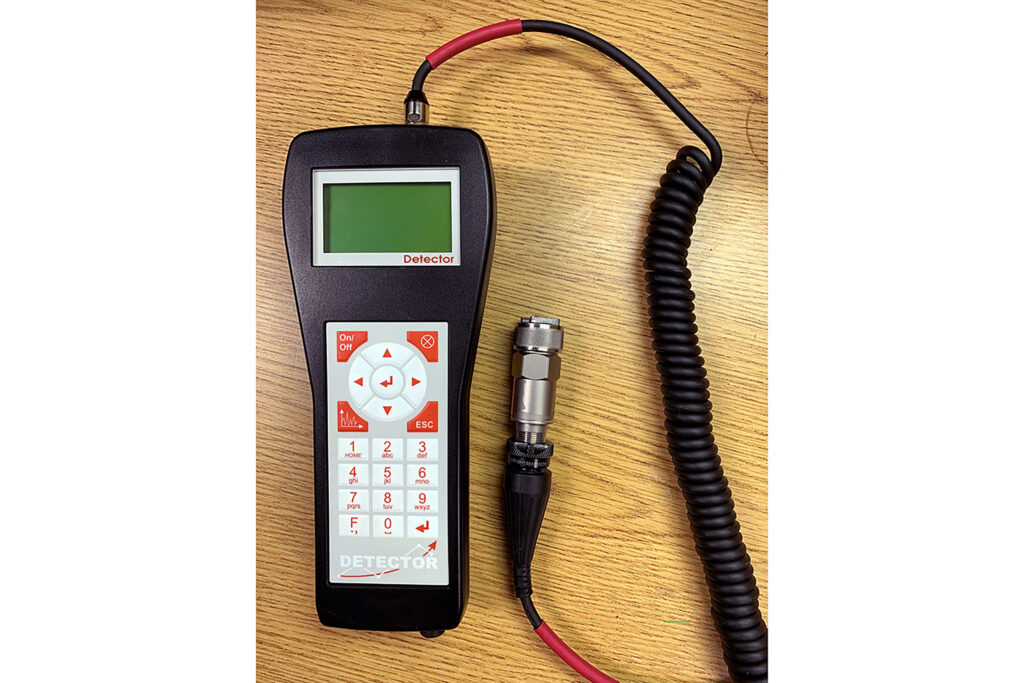
One of the easiest and most cost-effective steps in predictive maintenance is vibration analysis. When done regularly, vibration analysis monitors the health of a compressed air system from installation and provides an in-depth view of what is ailing the system — and more importantly, what could ail any system in the (near) future.
Vibration analysis can be done through service providers at regular intervals or can be done on a continuous basis with sensors. Vibration sensors measure the level of vibration frequency to help determine imminent failure points within the compressor. With the right equipment and training, professionals can determine exactly what component is failing.
Several problems may be identified using vibration analysis including a developing issue with a thrust or radial bearing and if the problem lies in the internal race, outer race, ball spin or cage. Also, early-stage lubrication bearing issues like spalling, pitting and cracking can also be identified. Other detectable issues include bearing wear, misalignment, rotor imbalance or something as simple as general looseness.
Vibration analysis is an important tool to use regularly to keep your air compressor properly maintained and running as efficiently as possible (see Figure 5).
Predictive maintenance beyond the air compressor
Predictive maintenance should also be performed on air treatment equipment. Issues with dryers and moisture in the system, for example, can dramatically affect operations downstream. The best way to monitor moisture content is with a dewpoint meter downstream of the dryer and filters, preferably in the dry receiver tank.
If there are operational deficiencies in the cleanup equipment, the first sign of underperformance will be in pressure dewpoint increasing. Trending this data could provide an alert to a pending failure of the dryer or simply overloading due to dirty or clogging heat exchangers.
Predictive and preventive maintenance play a critical role in keeping air compressor systems reliable and efficient. By understanding what to inspect, what to test and how often — and by building in air power redundancy — you can strengthen system resilience and help ensure the facility has a dependable fourth utility.