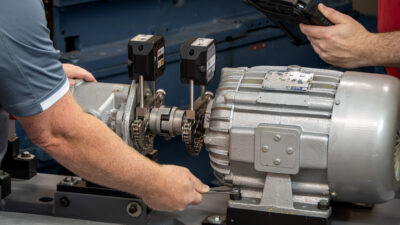
Corrosion control is an important aspect of asset management that should be incorporated into predictive and preventive maintenance routines and ingrained into the employee mindset.

Learning objectives
- Understand the direct and indirect value of corrosion control in asset management.
- Review the importance of basic corrosion control training.
- Learn the value of vapor corrosion inhibitors over traditional forms of corrosion protection.
Corrosion insights
- A proactive corrosion strategy strengthens asset management by helping facilities reduce downtime, preserve critical spares and recover costs that traditional maintenance approaches often overlook.
- By being alert to corrosion threats and understanding practical alternatives to more cumbersome and dangerous methods of corrosion control, facilities can save money and downtime — and even expand storage space.
How do plant maintenance employees think about corrosion as part of an asset management strategy? Do they view it as an inconvenient but inevitable part of the plant life cycle? Or do they view corrosion control as an opportunity to save the company time and money? Even if they are aware of the deeper costs of corrosion, do they have the tools and know-how to prevent and manage it? Or do they settle for traditional methods of prevention that are outmoded and inefficient?
Building a culture of corrosion awareness and mitigation is an excellent way to take a plant’s asset management plan to the next level of quality and value. By understanding the basics of evaluating, justifying, optimizing and adopting a corrosion mitigation plan, facilities can instill a proactive corrosion control mindset that overflows into plantwide benefits.
Evaluating facility corrosion risks
The first step in developing a culture of corrosion awareness is to evaluate the need at a plant.
- What are the internal and external corrosion threats?
- Is the plant located in a warm tropical coastal zone where breezes are laden with sea salt?
- Are warehouses open to the environment or mostly closed?
- Are structures climate-controlled or subject to extreme temperature and humidity swings?
Oil and gas plants on the Gulf Coast or auto parts manufacturers in the heart of the Midwest “Rust Belt” will naturally be greater candidates for corrosion awareness initiatives than a distribution center for plastic parts in the middle of dry Arizona.
In the process of assessing risk, asset managers must look at the potential costs and savings of either implementing or neglecting corrosion control measures. A good place to start is total corrosion costs. The Association for Materials Protection and Performance calculates the annual cost of corrosion at roughly $2.5 trillion and estimates that up to 30% of this amount could be saved through appropriate corrosion control practices. They conclude that this represents potential savings of four to six dollars for every dollar invested in the effort.
Justifying corrosion mitigation
General costs aside, individual plants should look at the potential cost of unplanned downtime from parts that have failed or are otherwise unavailable because of rust. The cost of unplanned downtime from any cause adds up more quickly in some industries than in others.
According to Siemens, it can range from more than $30,000/hour in the fast-moving consumer goods industry to more than $1 million/hour in an automotive plant. This averages out to potential losses upward of $600,000 across sectors. Even considering what would happen at one’s own facility if a major production line were shut down for a week from a rusty part in need of replacement puts the issue into perspective.
Another cost to consider is the value of warehoused spares and equipment. This could be anything from nuts and bolts to valves, pumps, offline boilers or backup turbines. Unpreserved idle parts can quietly corrode while no one is looking. This calls into question their integrity and potentially disqualifies them from use.
While this could lead to downtime, it also represents a potentially high cost when the value of degraded parts is considered. Warehouses full of corroded spares can easily represent thousands of dollars of losses that could have been prevented — or could be reclaimed — through proper corrosion mitigation.
Justifying corrosion awareness and mitigation also ties to the value and availability of storage space. While facilities with limited space may feel the need to build new warehousing to protect new goods from outdoor elements, this is not the only option. The right anticorrosion packaging materials can potentially transform an exposed, outdoor yard into an orderly storage space of thoroughly preserved equipment.
Potential losses and cost savings such as these should be identified and communicated to the proper decision makers when vying for better corrosion awareness. In many cases, the value of spares, downtime avoided or storage space added can easily justify the implementation of an anticorrosion initiative. Even without an official proposal, managers should start making their teams aware of the potentially high costs of corrosion to give them a wiser perspective on day-to-day maintenance decisions. It could mean the difference between losing a $6,000 valve stored on the rack outdoors and preserving it in a dry space indoors.
Optimizing corrosion control
In addition to understanding corrosion threats and justifying proactive mitigation, asset managers need to explore and understand the pros and cons of available technologies. One of the most practical and dependable methods of asset preservation relies on vapor corrosion inhibitor (VCI) technology. VCIs are especially suited to void spaces or packaging materials where corrosion inhibiting vapors from said technology are trapped and allowed to adsorb on metal surfaces, forming a protective molecular layer as long as the space remains closed. Unlike the results for nitrogen purge, commonly used to eliminate oxidation in industrial voids, the brief opening of a VCI treated space for inspection does not spell entire system failure nor demand costly reapplication.

In contrast to desiccant or dehumidification systems, VCI does not rely on moisture removal or electricity for effectiveness; it works even in the presence of moisture without a source of power. Often, removal of VCI products is relatively simple or unnecessary, maximizing time to installation and startup.
Adopting corrosion awareness and mitigation
Even before a specific corrosion awareness initiative project has been approved by leadership, maintenance managers can work toward change by fostering a culture of corrosion awareness. During everyday projects and training, they can encourage employees to be on the lookout for areas where corrosion is beginning to start and encourage them to evaluate storage and layup conditions for idle equipment.
Once a full initiative is approved, training can become more intentional with instructions on how and when to apply products. This may include sharing the following insights about different segments of equipment preservation.

Restoration and preservation of rusted spares: Warehouses full of spares are a surprising trove of potential loss or treasure due to the combined value of critical pumps, valves and other costly idle equipment in storage. To completely discard and replace these corroded items could be a loss of tens of thousands of dollars.
Fortunately, many items can be reclaimed. Employees managing these warehouses should be trained in the basics of rust removal to restore as many corroded components as possible. This can be as simple as filling one tub with a biobased acidic rust removal solution in which to soak the rusty part, a second tub with plain rinsewater and a third tub with an alkaline cleaner to neutralize the clean part and protect it against flash rust. These containers can be as small or large as needed to fit and completely immerse the rusty part.
Once the rust has been removed (a process that can take one hour to one day, depending on the severity of the rust and the concentration of the rust removal liquid), the component should be properly preserved. For this stage, employees should be thoroughly trained in appropriate packaging procedures and proper selection of corrosion inhibiting materials based on the size, component shape and storage duration. Key guidelines include:
- Making sure the component/compartment remains fully enclosed to trap protective corrosion inhibiting vapors within.
- Making sure metal surfaces avoid direct metal contact with wood or cardboard within the enclosure.
- Making sure that enough VCI chemistry is present to protect the full enclosure volume for the duration of storage.
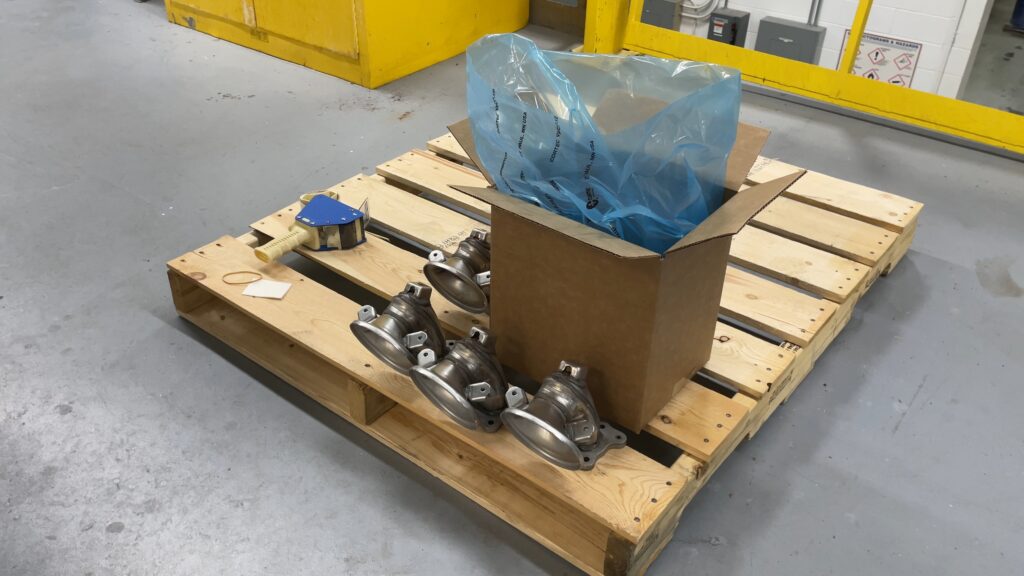
The process could be as simple as slipping a restored flange into a VCI bag or as extensive as shrink-wrapping a piping skid in VCI film with custom access doors and placing VCI pouches on the deck inside. Whatever the case, employees should be taught to identify the level of protection needed and follow best practices for applying VCI film, paper, emitters and fogging fluid. Tens of thousands of dollars of assets can be easily preserved.
Layup of process heating and cooling equipment: Whether working with a water treatment service provider or overseeing shutdown and startup themselves, maintenance teams also should be aware of the heightened risk for corrosion during layup and of the simple protective options that are available. Seasonal layup of boilers (in summer) and cooling systems (in winter) is a regular reminder of the importance of stewarding idle assets that are more vulnerable to corrosion when the normal water treatment chemistry is not in play. Rather than turning to cumbersome desiccants, accepting the costs of nitrogen blanketing and power-dependent dehumidification systems or doing nothing at all, application of VCI and companion layup materials is relatively simple, extremely versatile and effective. Little to no product removal is needed.
One way to apply VCI boiler layup chemistry is to place a water-soluble tube filled with VCI powder in an empty boiler after draining. Slitting open the tube allows corrosion inhibiting vapors to diffuse into the enclosure and protect surfaces during layup season (as long as all vents remain closed). At startup time, the product simply dissolves in the makeup water.
VCI fogging fluids and liquids with a combination of VCIs and filming corrosion inhibitors expand treatment options to meet a diverse range of boiler or cooling system sizes and layup needs. If a facility relies on water treatment service providers instead of directly handling layup, the maintenance team should ask them about the possibility of using VCI materials.
Dry sprinklers and insulated piping: Another area where VCI can come in handy for asset management is protection of dry sprinkler systems and insulated piping. Dry fire sprinklers are often protected with nitrogen purge, which tends to be more expensive and dangerous and less effective than VCI protection. Special application equipment used to distribute VCIs has been providing facilities with a practical way to reduce corrosion risks independently of electricity.
For insulated surfaces, corrosion under insulation is a serious concern because insulation not only traps moisture and condensation but also hides corrosion and makes remediation difficult. Protective coatings must be applied at the beginning of the component life because it may be too costly and laborious to remove and reapply insulation later.
VCIs offer a workaround because they can be injected through the existing insulation and allowed to migrate to the hidden metal surface. At least two versions have been created — one for lower temperature surfaces and one for higher temperature surfaces — allowing corrosion protection on existing assets.
Fighting structural corrosion: Maintenance crews should also be attuned to the needs of concrete and metal surfaces. Concrete floors in high traffic environments with exposure to chemicals, moisture and food are prime candidates for epoxy coatings. In addition, concrete prefab walls can benefit from a periodic coat of surface-applied corrosion inhibitors and water repellents to fight corrosion on reinforcing metal and discourage the ingress of water and other corrosives.
Metal structures like beams, tanks, railings and stairways should automatically be protected with paint, which maintenance crews should inspect annually to look for signs of wear or corrosion that indicate the need to recoat. A rust-converting primer can be helpful for passivating rust on surfaces that are difficult to sandblast and/or where rust has not progressed very far. Anticorrosion paints, preferably in a one- or two-coat system, should only be applied after surfaces have undergone thorough surface prep.
Maintenance includes corrosion inspection, prevention
In addition to training employees in corrosion concerns and proactive care, maintenance teams can take advantage of computerized maintenance management systems (CMMS) to foster corrosion awareness. CMMS make it easy for facilities to schedule reminders for preventative measures such as annual ordering and application of VCI and related chemistries for boiler and cooling system layup, biannual application of VCI emitting materials inside electrical compartments or routine corrosion inspection of warehoused spares to make sure no film is torn or VCI has escaped.
Whether a maintenance team currently has low, medium or high corrosion awareness, fostering an environment that increases familiarity with corrosion concerns and simple preventative or restoration solutions has the potential to save and recover significant value that could otherwise be eaten away by corrosion. Corrosion is a real concern, but practical solutions exist, making corrosion awareness and control an extremely valid, viable part of asset management.