BESS has evolved from a sustainability asset into critical stabilizers for industrial uptime.

Learning objectives
- Analyze the technical role of BESS in microgrid stabilization, specifically its ability to provide sub-cycle response times and maintain frequency/voltage for sensitive electronic loads.
- Evaluate strategic sizing requirements, including the application of diversity factors and the mitigation of inrush currents from large inductive loads like motors and drives.
- Identify actionable maintenance and safety protocols, ranging from artificial intelligence-driven predictive analytics for cell degradation to specialized fire suppression strategies for chemical storage.
BESS insights
- This article explores how plant engineers can leverage BESS to correct power quality, optimize peak demand and ensure seamless transition during utility failures.
- BESS has become a core industrial power asset, providing instant backup, microgrid stabilization, power quality correction and right-sized energy management as facilities contend with declining grid reliability and rising demand.
- BESS also supports peak shaving, regenerative energy capture, predictive maintenance, specialized safety planning and scalable infrastructure design, making it essential for both operational resilience and long-term financial performance.
The industrial landscape is currently undergoing a fundamental shift in how electricity is managed within the four walls of the plant. As grid reliability declines and the demand for high-density power increases, driven largely by the rise of AI-driven data centers and complex automation, the battery energy storage system (BESS) has transitioned from a niche sustainability asset to a core requirement for facility uptime.
For plant engineers and maintenance supervisors, the BESS represents the most versatile tool available for correcting power quality, managing peak demand and bridging the gap between utility failure and backup generation.

Using BESS for grid stabilization
In an industrial environment, the primary value of a BESS lies in its ability to provide instantaneous, sub-cycle response times. Unlike mechanical generator sets (gensets), which require several seconds to reach operating speed and temperature, a BESS uses power electronics to provide an immediate injection of energy.
This function is vital for maintaining the continuity of processes that cannot tolerate even a millisecond of downtime. By stabilizing the microgrid during the critical window of transition, the BESS ensures that when a secondary source eventually accepts the load, it does so in a synchronized, stable environment.
Beyond simple backup, a BESS acts as a microgrid stabilization solution by maintaining and correcting system voltage and frequency. Sensitive electronic loads, including robotics, high-speed programmable logic controllers and variable frequency drive-controlled motors, are highly susceptible to minor fluctuations in power quality. This “buffering” effect is critical for preventing equipment malfunction and extending the lifespan of sensitive components that would otherwise be degraded by “dirty” power or momentary sags.
Strategic BESS sizing and load characterization
Designing an effective BESS requires more than matching a nameplate capacity to a total facility load; it requires a granular understanding of load diversity and power profiles. Engineers must evaluate diversity factors, the reality that not all systems — such as test equipment, motors and heating, ventilation and air conditioning (HVAC) — operate at full capacity simultaneously. By leveraging real-time data and load profiling, facility managers can right-size their battery arrays, allowing for a smaller, more commercially viable BESS that still meets the facility’s demands.
This coordination ensures that the BESS can maintain site stability while the primary backup sources, such as natural gas or diesel generators, are synchronized and brought online to assume the long-term load. By smoothing these transitions, the design maximizes battery life and ensures a seamless handoff between power sources.
Operational optimization and ROI
Beyond simple resilience, the BESS serves as a financial optimizer through advanced energy management strategies like peak shaving. In many jurisdictions, industrial facilities are subject to heavy demand charges based on their highest point of energy consumption. A BESS can be programmed to discharge during these intervals of high demand to offset the facility’s draw from the utility grid. This is vital for facilities operating near the limits of their utility power allotment or those participating in utility-led demand response programs.
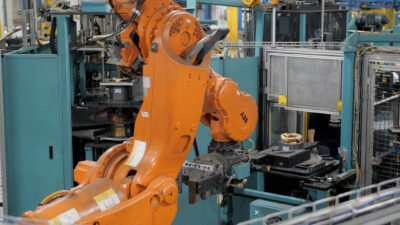
In addition, modern manufacturing often involves regenerative processes, particularly in research and development test cells where motors or drives are being tested. Rather than dissipating this energy as waste heat, an integrated BESS can capture and store this power. This “recycled” energy can then be routed back into the plant grid, reducing overall utility costs and improving the facility’s carbon footprint.
Predictive versus reactive maintenance
The maintenance profile of a BESS differs significantly from traditional mechanical equipment. While there are fewer moving parts, the complexity lies in chemical management and digital controls. The shift toward digitalization allows maintenance supervisors to move toward predictive models where real-time data collection forecasts cell degradation and identifies potential complications before they lead to an unplanned outage.
To ensure longevity and reliability, maintenance teams should focus on several key operational areas:
- Thermal management: Ensuring HVAC or liquid-cooling systems are functioning at peak efficiency to prevent thermal runaway.
- System validation: Regularly checking voltage, frequency and phase sequence to ensure power quality meets operational requirements.
- Control logic testing: Periodically simulating utility failures to ensure the automated handoff between the BESS and other power sources remains seamless.
- Predictive analytics: Using remote access and real-time data to schedule maintenance downtime for cleaning filters or checking connections during planned outages.
BESS safety and hazard management
Integrating high-capacity battery storage into an industrial facility introduces specific fire and life safety requirements that must be addressed during the design and commissioning phases. Standard water-based fire suppression is often insufficient for battery-related fires; therefore, facilities must invest in specialized containment and suppression strategies designed for chemical storage.
Additionally, protective devices and circuit breakers must be set to isolate faults locally, ensuring that a fault within one battery rack does not trigger an upstream shutdown that interrupts power to unrelated manufacturing lines.
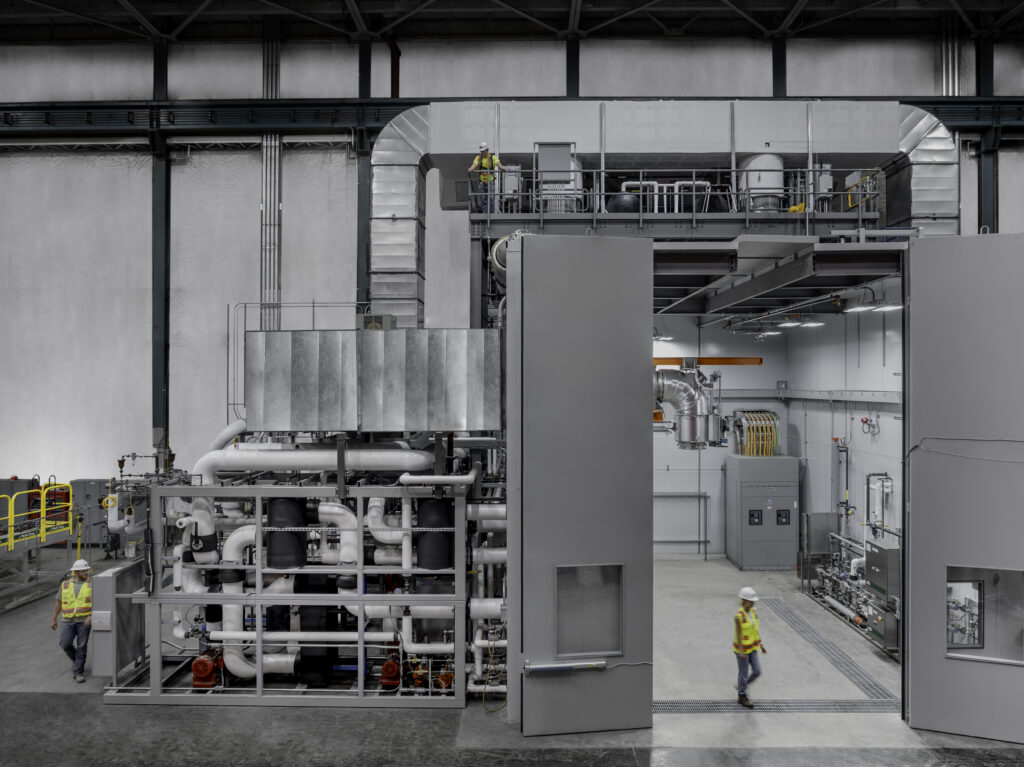
Clear, durable equipment labeling and up-to-date system diagrams also are essential for emergency response. Operations staff must be able to quickly manage disconnect controls during equipment changeovers or safety events. Because battery fires can be intense and difficult to extinguish, the strategic layout of the BESS in relation to fuel storage for other gensets is a critical safety consideration for any facility manager.
Futureproofing through BESS
As industrial facilities face increasing pressure to deliver uninterrupted, efficient and scalable power, the BESS has become the cornerstone of modern plant engineering. By focusing on scalability and modular design, facility managers can ensure their power infrastructure grows in lockstep with their production capacity.
The strategic implementation of a BESS, grounded in thorough commissioning, predictive maintenance and intelligent control systems, allows a facility to withstand grid volatility and secure long-term operational certainty. For the modern plant, energy storage is no longer an optional accessory, but the fundamental stabilizer of the production environment.