AUtomated Inspection Insights
- Automated inspection technologies are giving electrical service teams critical visibility before exposure, helping reduce risk by assessing hazardous environments remotely before engineers enter.
- Robotics, advanced sensors, and AI are transforming inspection data into actionable insights that improve safety, efficiency, and asset management decision-making.
- The future of electrical field service is not about replacing engineers, but enhancing their expertise with better information and tools to make safer, smarter decisions.
Electrical infrastructure has become a business-critical asset for modern industry.
As operations become more dependent on reliable power, expectations of electrical service are changing too. Technology is helping make service work safer and more effective, but it is also creating opportunities to rethink how inspections are carried out in the first place.
Automated inspection is one area attracting significant attention. Thanks to advances in robotics, sensors and software, it is now showing the potential to transform how field service teams assess risk, gather information and prepare for work on-site.
Site inspection has barely changed for decades. When an issue is reported, the service team visits the site to assess the problem and decide on the best course of action. The work is highly skilled, and it is often carried out in challenging conditions. However, with today’s technology, it is worth challenging a long-held assumption: do field service engineers always need to be the first to enter a potentially hazardous environment?
Visibility before exposure
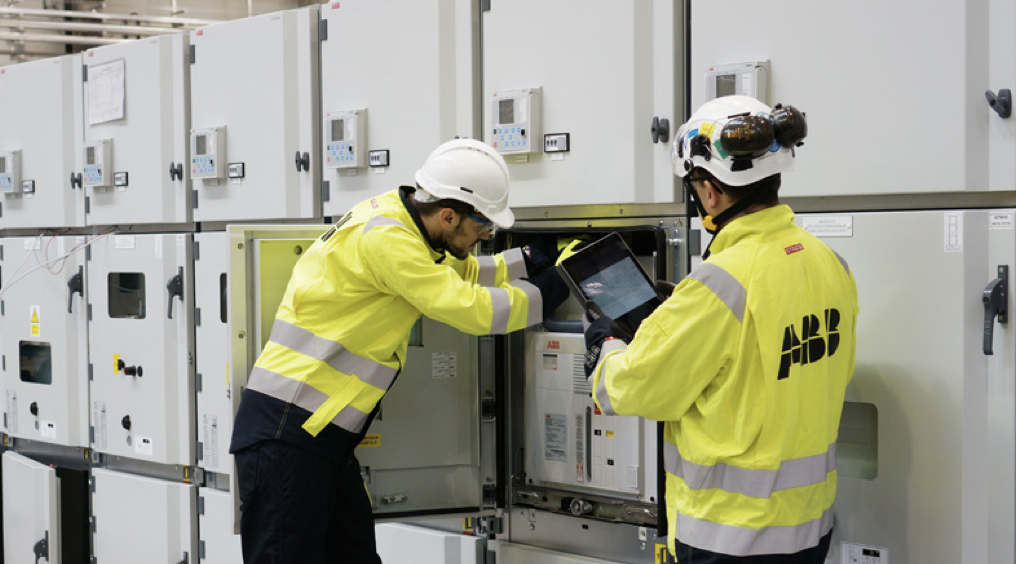
Take a live switchgear room for example. Today, a qualified engineer may need to enter the room to assess its condition, often with limited information about what they will find inside. That expertise is essential, but it also means making critical decisions before the full picture is available.
This is what drives interest in robotic inspection platforms. They have the potential to reduce direct human exposure while still providing the quality and depth of information needed to assess high-risk environments. More importantly, they offer something that service teams have rarely had before: visibility before exposure.
Robotic platforms can capture information such as thermal, acoustic and visual data from hard-to-reach locations. That information can help teams understand operating conditions, identify potential hazards and make more informed decisions before work begins.
This is not a distant future scenario. Suitable robotic platforms are already commercially available, and they are improving rapidly. The challenge is in adapting what already exists to suit the specialized requirements of electrical service work. That is where research and development efforts are focused. We are combining service expertise, software development and engineering knowledge to build an application layer, so that robotic platforms can operate effectively in complex, safety-critical electrical environments, and integrate seamlessly with broader asset management systems.
Right now, much of this work remains at the prototype stage. We are not looking to adopt robots for their own sake. The objective is to understand how emerging technologies can be applied to solve real-world service challenges and create meaningful improvements in safety, efficiency and operational resilience.
From data to action with automated inspection
The value of automated inspection technologies ultimately comes from the insights they gather and actions they enable. Today, that means developing the capability to collect thermal imaging, acoustic monitoring and visual inspection data remotely, and analyze it far more quickly than traditional approaches allow.
Artificial intelligence (AI) has become a critical enabler. It helps transform large volumes of inspection data into actionable recommendations. That means service teams can identify potential issues earlier, prioritize their inspection activities effectively and prepare more thoroughly before work begins, having greater context and a clearer understanding of the condition of the assets they are inspecting. Far from replacing human expertise, these tools are helping to make sure that decisions are informed by the richest and most precise information available.
Engineers stay in control
Conversations around introducing automation into the service industries quickly default to the question of replacing skilled workers. But it misses the direction of travel – particularly in electrical field service. Human judgment is irreplaceable because of the complexity of the environment and the stakes of every decision made.
It is an ambition is to strengthen human capability, not to replace it. We will always need engineers to decide what should be inspected, interpret the findings and recommend the best course of action. With automation, human expertise can be spared the noise and danger of repetitive, high-risk or difficult-to-access inspection tasks, while providing richer information from the outset.
Inspection technology should not be seen as a cost-cutting measure, either. It is more a way to help service teams achieve more with the same resources – arming them with better tools, better information and better support, all with the aim to help them perform their work both more safely and more effectively.
Human and technology integration will not be straightforward. Electrical environments are complex, safety-critical and highly specific. That is why the most promising innovations are often those that make existing expertise more effective. That said, adapting general-purpose technologies so that they become genuinely useful in a high voltage switchroom or a live substation will require sustained investment in research, software and digitalization.This is why we see automated inspection technologies as having the potential to improve safety, deliver a higher level of visibility of asset conditions, and help service teams act with greater confidence.
Even though many advanced inspection capabilities remain in development, the direction is clear. The intention is never to take people out of field service. Rather, we want to ensure that when engineers enter complex electrical environments, they do so with less exposure to risk than ever before.
Read more about the latest thinking on the future of electrification services in ABB’s new whitepaper.