The quality of compressed air begins with the ambient air the compressor “inhales,” which can be impacted by the location and design of the compressor room, ventilation and health and safety factors.

Learning objectives
- Identify how compressor room design and environmental controls protect personnel from safety hazards.
- Understand how the operating environment influences compressed air quality, component longevity and system reliability.
- Apply best practices and considerations when planning and designing a compressor room, including layout, ventilation, filtration and expansion considerations.
Compressed air insights
- Most manufacturing facilities rely on compressed air to operate. This article covers the environment in which the compressor is installed and its many effects.
- Read about best practices when planning, installing and maintaining a compressed air system, including compressor room location and design, ventilation and health and safety considerations.
Air compressors come in several different designs, including oil-flooded rotary screw, oil-free rotary screw, reciprocating and centrifugal. While they share similar requirements for intake air quality, utilities and serviceability, other factors, such as size and plant operational needs, will vary by compressor type and application.
Compressed air is commonly considered the fourth utility, often as important as electricity, water and natural gas. Without it, production grinds to a halt. Given the installation and operation investment for a compressed air system, optimizing the compressor’s performance and long-term reliability is critical.
Health, safety for those using compressed air
First and foremost, the health and safety of personnel is paramount when planning to add new or updating equipment in plant layouts. Compressed air equipment should be installed to eliminate or mitigate hazards to those at risk, including operators, maintenance and manufacturing workers. A quick overview of possible hazards to keep in mind are high noise levels, high temperatures, chemical exposure, rotating equipment and electrical hazards.
Best practices for hazard mitigation include isolating excessive noise producing compressors away from personnel, providing proper personal protective equipment to operators and maintenance employees and locating electrical panels and valves where lock out/tag out equipment can be easily installed. The compressor room should also have sufficient entrances and exits to move in and out of and to service the equipment safely.
In addition, compressor fluids, cleaning supplies and water treatment chemicals need to be properly stored and labeled for the safety of workers in the compressor room.
For further guidance on identifying and mitigating hazard exposure, consult resources from organizations such as Occupational Health and Safety Administration, Mine Safety and Health Administration and National Fire Protection Association.
Location, layout of the compressor room
Room design goes hand in hand with optimizing compressed air systems, as a room’s layout can affect the compressor’s performance, reliability and maintenance. While a dedicated room for your compressed air system is nice to have, many facilities also house boilers, chillers, pumps and other industrial equipment in the same room. These types of equipment can significantly influence the compressor environment.
Equipment placement can affect the operation of compressors, dryers and filters. Room temperature, for example, can limit compressed air dryer performance and prevent it from removing the proper amount of moisture. Compressed air treatment equipment is often located in the same room.
Some considerations include:
- How much heat might be added to the room by compressed air dryers, boilers, pumps or heat exchangers?
- Could chiller or boiler exhaust contain chemicals that could be ingested by the compressor?
- Is it necessary to store water treatment chemicals being fed to the boiler and/or chiller?
When positioning all equipment, it is important to envision a plan for maintenance. Lifting equipment may be required to change oil/air separator elements for large compressors. Space must be available for pumping out and replacing compressor fluids, as well as accounting for room to remove motors (main and fan), the compressor pump and fluid or air heat exchangers. These are some of the heaviest components, typically weighing several hundred pounds, so the location will either need built in overhead cranes or allow for forklifts or portable lifting frames to maneuver.

Proper airflow around the compressor is another key element. Adequate ventilation will allow for proper compressor operating temperature control, which is important regardless of the compressor’s cooling system. Compressor packages will need to be supplied with the air volume specified by their technical data sheets for both compression and cooling. Poor ventilation can reduce the life expectancy of components, such as electric motors, electrical controls and heat exchangers, by causing the compressor to run above its normal operating temperatures. This condition drives up the operation costs and reduces equipment life.
One benefit of proper ventilation is the opportunity to recover the heat exhausted from the compressor package. This heat can often measure in the tens of thousands of British thermal units and can be used in production processes or to heat working spaces to save energy.
An example of heat of compression recovery is its use in textile manufacturing production processes. In one case, a heat exchanger was added to the compressor fluid system to preheat water being fed to the boilers for steam production. Recovering this heat lowered natural gas consumption, which lowered energy costs by nearly $20,000 per year. The additional cost of the heat exchanger added to two compressors was less than $15,000, yielding a projected return on investment in less than nine months.
Planning the compressor room and system layout should also account for possible contamination sources. Proper location and equipment placement can help minimize exposure to particulate, moisture and chemicals that can damage compressor components or fluids. These environmental factors directly influence the quality of compressed air delivered to the facility, which is critical for both system performance and reliability.
Compressed air quality: moisture and condensation
With the compressor environment and its impact on operation addressed, it is equally important to focus on maintaining the quality of compressed air itself.
Compressed air treatment removes moisture, particulate and oil vapors to meet a facility’s specified air quality requirements. There are different treatment levels, which vary depending on the application. For example, paper production has different air quality needs than food processing and quality is measured against standards set by the International Organization for Standardization (ISO).
Anything in the inlet air of the compressor is concentrated during the compression process. To produce 100 pounds per square inch gage, ambient air is compressed at a ratio of 7.8 to 1, concentrating any vapors by a factor of eight. Water vapor is the most common contaminant found in ambient air and moisture is inherently present in almost all compressor operating environments. The moisture quantity can be substantial: a 100-horsepower compressor exposed to average ambient air conditions of 75°F, 75% relative humidity and is at sea level can ingest over 68 gallons of moisture in a 24-hour period. This moisture must be maintained as a vapor throughout the compressor to avoid condensation.
Most compressors are designed to handle this moisture content without immediately diluting and damaging the compressor fluid; however, prolonged exposure or higher-than-normal moisture loads can lead to compressor component degradation.
For instance, when compressors are near cooling towers or other processes that release water vapor into the intake air, condensation can occur within the compressor. This dilutes the fluid, reducing its ability to lubricate components such as bearings, accelerating wear on seals and other elastomers and causing cast iron and other ferrous metals to rust. Condensed moisture can also cause compressor fluids to exhibit decreased pH, increased viscosity and the breakdown of additives and base fluids.
Approximately 65% of the ingested moisture is condensed by the aftercooler on or near the compressor. Most of the remaining moisture will condense in filters, air storage tanks or is removed by air dryers. This untreated water cannot be discharged directly into floor drains or onto the ground due to environmental regulations. Because the condensate can contain compressor lubricants, a system must be in place to capture and filter it before disposal.
Compressed air quality: particulate contamination
Particulates in both ambient and within the compressed air system are a concern for many applications. High particulate environments include mining sites, paper manufacturing, cardboard production and textile manufacturing.
Compressor intake filtration is specifically designed to protect the tight tolerances found in compression chambers, which can be as tight as 0.001 to 0.002 inches. Intake filter elements must be designed to filter for particulate as small as 1 micron. When subjected to high particulate environments, the filter element lifespan can be reduced from three to six months to a few hundred operating hours, which can increase maintenance costs.
When high particulate exposure is unavoidable, one option is to prefilter the air entering the compressor room or remotely locating intake filters away from high particulate concentration sources. Accounting for these measures early in planning can save time and money.
Here’s an example of the consequences of not accounting for the inlet location: A container manufacturer installed compressors in the center of the facility. The area appeared to be clean and the production equipment did not produce much particulate matter. Soon after operation began, the compressor’s controller displayed a high oil/air separator pressure drop warning.
The filters, designed to last a year under continuous 24/7 operation, had to be replaced at a cost of over $1,000 per compressor and the new filters showed contamination within a few hundred hours. Investigation found the compressors were drawing intake air from the receiving dock over 100 feet away, where idling delivery trucks discharged exhaust just inside the building. Relocating the compressor intake filter housings to the roof resolved the contamination problem caused by diesel exhaust particulate (see Figure 4).
Other particulate sources may also include rust, pipe scale and microbes. Proper filtration between compressed air system components (compressor, dryers, tanks, etc.) helps ensure ISO-level air quality is maintained.
Compressed air quality: oil or chemical contamination
Oil contamination, such as aerosols and liquid hydrocarbons, can also affect compressed air quality and damage system components. Certain applications may require additional filtration to remove these contaminants and help protect compressors and downstream equipment.
Another major environmental concern for compressors is what chemicals are present. External chemicals, such as ammonia, chlorine or engine exhaust fumes can mix with compressor fluid during compression, potentially altering fluid characteristics and damaging components.
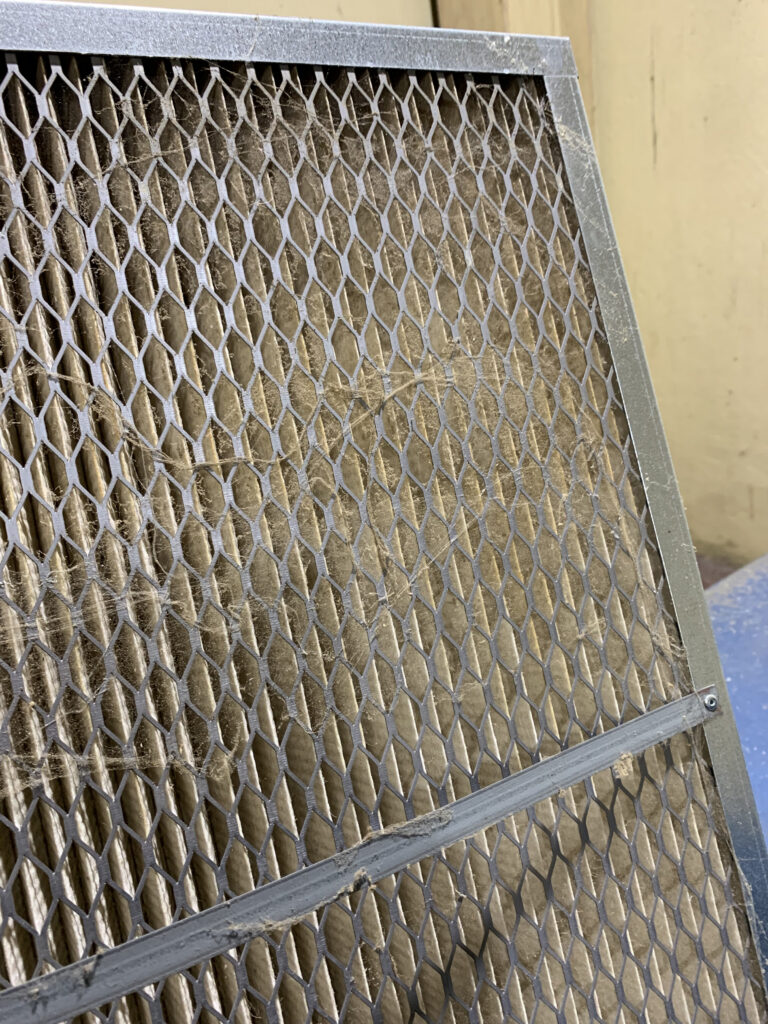
When planning compressor placement, it is wise to test ambient air in the areas where chemicals are present. Air samples can then be sent for analysis and air coupons can be placed to indicate the presence of harmful chemicals. After installation and start up, regular compressor fluid sampling is recommended to monitor environmental contamination. Early detection of chemical exposure helps prevent equipment degradation and supports consistent compressed air quality.
Compressor room growth
Future growth of a compressor room should be considered during the initial design and before installation. Factory expansion often involves added demand, so designing the air piping system with growth in mind can prevent pressure drops and flow issues, saving time and money. Some best practices include:
- Sizing the primary header larger than initially required and building it in a loop that returns to the compressor room, allowing for multidirectional flow and minimizing pressure drop.
- Using rounded tee connectors in strategic places to allow for easier piping addition with minimal pressure drop.
- Locating sufficient storage tanks near high air usage points to help prevent pressure drops at other production areas.
- Installing valves in the headers to allow for adding piping without shutting down the entire system.
Carefully planning a compressor installation that accounts for maintenance, future expansion and environmental contamination protection is well worth the effort. Forward thinking design will maximize the return on investment and deliver a reliable, lower cost, steady supply of that vital fourth utility, compressed air.